
The right integration platform changes the math entirely. It saves engineering bandwidth, speeds up onboarding, and directly shapes revenue and adoption. This guide breaks down what to look for and reviews the top external API integration platforms serving SaaS companies in the US market today.
TL;DR
- Unified API platforms connect you to dozens of third-party systems through one integration instead of building each natively
- Evaluate platforms on integration breadth, data normalization quality, security compliance, and maintenance overhead
- Choose vertical platforms like Bindbee for benefits-first HR Tech depth, or horizontal ones like Merge, Apideck, and Finch for broader coverage
- The right choice cuts integration build time from weeks to hours, freeing engineers for core product work
Overview of External API Integration Platforms in the SaaS Industry
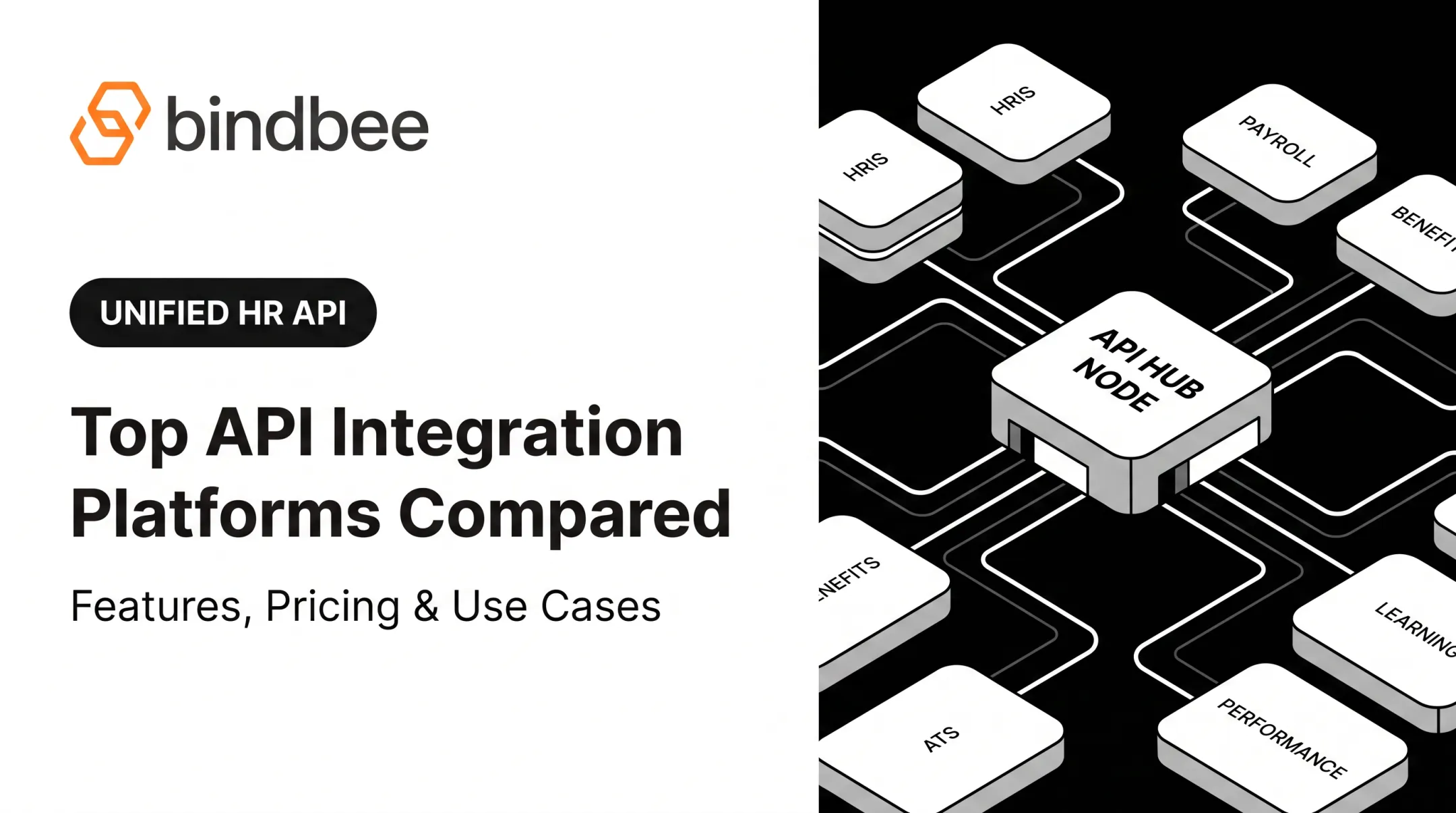
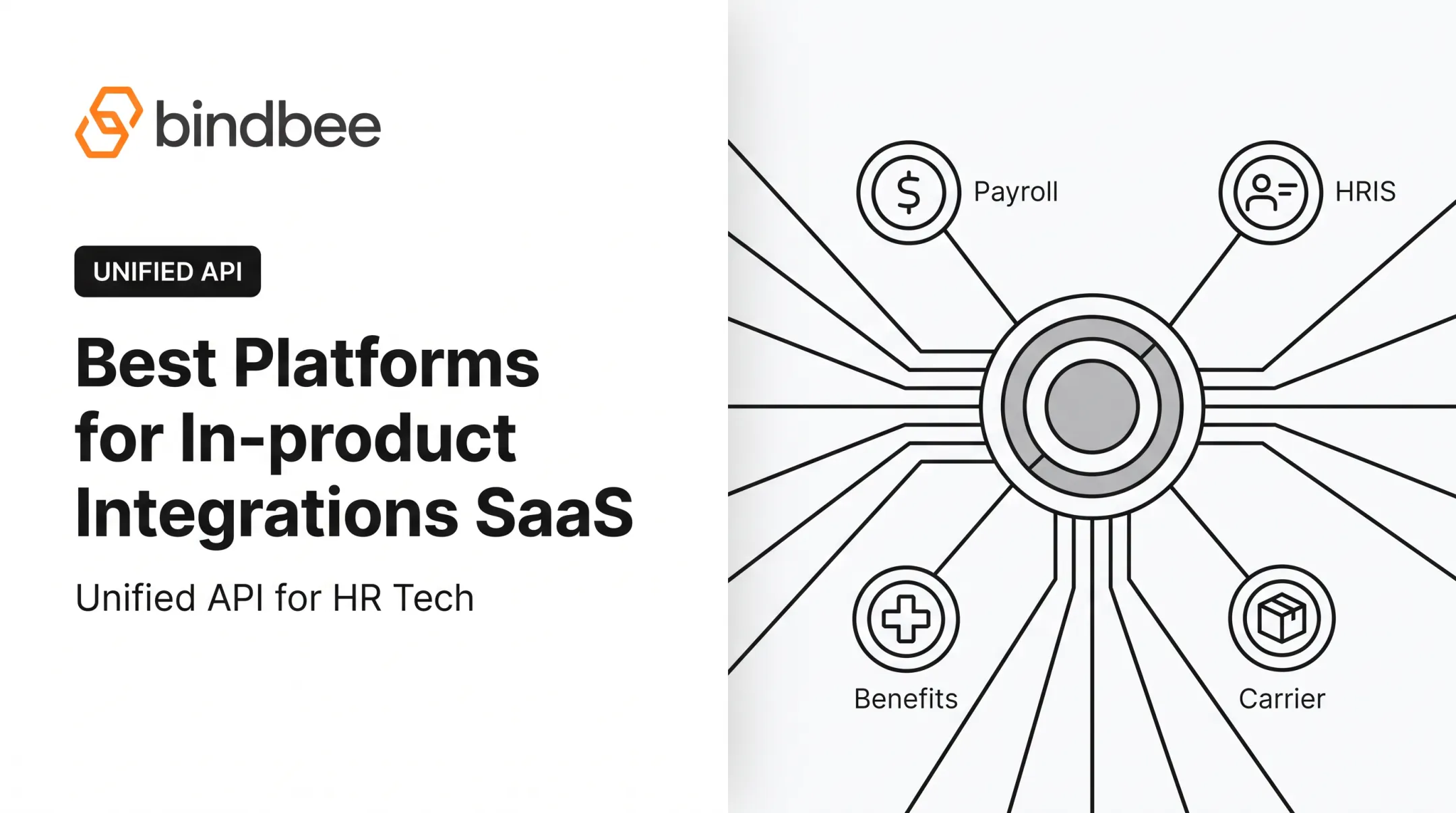
SaaS teams still burn engineering cycles building one-off connectors for every HRIS, payroll, or benefits system a customer uses. External API integration platforms—often called unified or aggregator APIs—sit between your product and those third-party systems so you write one integration against a normalized schema instead of separate code for Workday, ADP, BambooHR, and the rest.
This category is expanding fast. Gartner reported the global iPaaS market grew 23.4% to $8.5 billion in 2024, and Mordor Intelligence projects continued growth through 2031.
That figure covers the broader integration-platform market, not unified APIs alone, but it shows how central integration has become to software buying decisions. G2's research backs this up: 82% of software buyers consider integration compatibility important when evaluating a purchase.
Below are the platforms SaaS companies in HR Tech, benefits, fintech, and adjacent B2B categories should shortlist.
Top External API Integration Platforms for SaaS Companies
When comparing platforms, weigh five factors: integration breadth, data model quality, compliance certifications, developer experience, and ongoing maintenance support. Connector count alone tells you little if the underlying data is inconsistent.
Bindbee
Bindbee builds unified API infrastructure specifically for HR Tech and Employee Benefits platforms, connecting to 60+ HRIS, payroll, ATS, and benefits/carrier systems including Workday, ADP, BambooHR, Gusto, Rippling, Paychex, UKG, and SAP SuccessFactors.
What sets it apart from horizontal players:
- Benefits-first data models — distinct Employee Benefits, Employer Benefits, and Dependent Benefits schemas covering enrollment details, plan configuration, and dependent coverage
- SFTP-to-API bridge for legacy HRIS systems that only export CSV, XML, or fixed-width files
- Webhooks for life events — new hires, terminations, hours reductions, marriage, divorce, and dependent changes, delivered in real time instead of batch files
- Setup in under a day versus 4-8 weeks for native builds
Customer results:
- Newfront cut census-data integration from 12 weeks to 48 hours
- Healthee went from 2+ months of custom work per employer to same-day go-live
- Phin reduced onboarding time 76% and saved over $115,000 a year in development costs
| Key Features | Compliance | Time-to-Value |
|---|---|---|
| Unified schema, 60+ integrations, life-event webhooks | SOC 2 Type II, ISO 27001, HIPAA Compliant, GDPR Ready | Under 1 day setup vs. 4-8 weeks native |

Merge
Merge is a general-purpose unified API covering HR, ATS, accounting, ticketing, and CRM categories, making it a fit for SaaS products that need broad category coverage rather than deep benefits-specific data.
Founded in 2020, Merge has built out extensive developer documentation and serves customers including Telnyx, Perplexity, and Drata. Its pricing is structured around "Linked Accounts" rather than flat tiers.
| Key Features | Pricing Model | Categories Covered |
|---|---|---|
| Hundreds of app integrations, HR/payroll/SCIM support | $650/month for 10 production Linked Accounts (first 3 free); $65 per account after | HR, payroll, ATS, accounting, CRM, ticketing |
Apideck
Apideck focuses on accounting, CRM, e-commerce, and HR integration categories with a developer-first design. It offers one normalized API per category plus shared OAuth flows, SDKs, and full CRUD support.
The platform lists 200+ connectors overall, with 60+ specifically for HRIS and payroll. G2 and Capterra reviews mention reduced development overhead and responsive support, though some users note gaps in less common connectors.
| Key Features | Pricing | Supported Categories |
|---|---|---|
| Normalized per-category API, read/write access, SDKs | Launch: €599/mo (25-50 consumers); Scale: €1,299/mo (100-500 consumers) | Accounting, CRM, HRIS, ATS, e-commerce, POS |

Finch
Finch specializes in payroll and HR system connectivity, with particular strength in fintech use cases like earned wage access and lending underwriting. It connects to 250+ HR and payroll providers.
Exhale used Finch for employee enrollment, payroll retrieval, and borrowing-eligibility checks in an earned-wage-access product. The team reported roughly 40 hours of operations work saved per week. Finch's Pro plan adds benefits configuration, W-4 data, and write-back capability.
| Key Features | Compliance | Integration Depth |
|---|---|---|
| Payroll reports, benefits config, employment verification | SOC 2 Type II, GDPR (stated compliance) | Starter: 24 providers; Pro: 250+ providers |
Nango
Nango takes an open-source, code-first approach, giving engineering teams more control than a fully managed platform. It handles authentication, data syncs, custom integration logic, and webhooks, with deployment options ranging from Nango Cloud to full self-hosting.
This suits teams that want to own their integration infrastructure rather than depend entirely on a vendor's roadmap.
| Key Features | Deployment Model | Ideal Use Case |
|---|---|---|
| Auth, syncs, custom logic, webhooks | Cloud, self-hosted, or bring-your-own-cloud | Engineering teams wanting build control |
How We Chose the Best Platforms
Our evaluation prioritized integration breadth, data model consistency, security certifications, and documented customer outcomes over marketing claims. G2 defines this category as platforms that aggregate multiple third-party APIs behind a standardized data model and developer experience. That definition set the bar for every platform we reviewed.
Common buyer mistakes:
- Prioritizing raw integration count over data quality: 200 connectors mean little if the schema is inconsistent across them
- Ignoring long-term maintenance costs, since vendor API changes and version drift don't stop after launch
- Skipping compliance checks until late in procurement, which stalls enterprise deals with HR and benefits customers
- Assuming horizontal platforms serve vertical needs equally well: benefits data has eligibility rules and dependent structures generic HR models don't capture
Each of these ties directly back to engineering time. A platform that saves setup time but creates ongoing maintenance work hasn't actually solved the problem.

Conclusion
The best external API integration platform for your SaaS company depends on your vertical—not brand recognition or connector counts. A horizontal platform like Merge or Apideck can fit a product that spans many categories. A vertical specialist like Bindbee fits better when benefits eligibility, dependent data, and carrier connectivity sit at the core of your product.
Before you commit, pressure-test:
- Scalability as customer volume and connector demand grow
- Compliance readiness (SOC 2, HIPAA, GDPR)
- Total cost of ownership, including engineering hours spent on maintenance after launch
Building an HR Tech or benefits platform? See how a benefits-first unified API can cut integration timelines from weeks to hours—book a demo with Bindbee.
Frequently Asked Questions
What is an external API?
An external API is an interface that lets third-party developers or applications access specific data or functionality from another system. It's exposed outside the owning organization, unlike internal APIs used only within a company.
What does API integration mean?
API integration is the process of connecting two or more systems through their APIs to automate data exchange and workflows. It typically involves authentication, data mapping, and handling ongoing schema or version changes.
What is the difference between internal and external APIs?
Internal APIs are used within an organization's own systems and stay hidden from outside users. External APIs are deliberately exposed to third parties, partners, or customer-facing applications.
How do I choose the right integration platform for my SaaS product?
Look at integration breadth relevant to your vertical, data normalization quality, and compliance certifications like SOC 2 or HIPAA. Also weigh setup time against long-term maintenance overhead, not just upfront cost.
What is a unified API and how does it differ from building integrations natively?
A unified API consolidates dozens of third-party connections into one consistent schema, so you build once instead of per-provider. Native builds typically take 4-8 weeks per integration, while unified APIs can cut that to under a day.
How much engineering time can a unified API integration platform save?
Customer examples show setup dropping from 12 weeks to 48 hours and onboarding time falling by as much as 76%. Ongoing maintenance savings compound further, since the platform absorbs vendor API changes instead of your team.