
These are two different problems, and they call for two different kinds of integration platforms. In a 2024 survey of over 100 B2B SaaS leaders, 84% said integrations were "very important" or a "key requirement" for customers, and integrations came up in roughly 60% of sales cycles, according to PartnerStack's 2024 survey.
Picking the wrong platform doesn't just slow down a project. It affects engineering workload, customer experience, who owns the integration roadmap, and how much visibility your team has when something breaks. This article breaks down where embedded iPaaS and traditional iPaaS each make sense.
Key Takeaways
- SaaS companies use embedded iPaaS to ship integrations as a product feature; traditional iPaaS serves internal IT, ops, and business teams.
- Multi-tenant config, in-app auth, reusable logic, and branded UX set embedded platforms apart.
- Traditional iPaaS fits internal workflows or one-off automations that never become product features.
- Many SaaS teams run both, choosing by customer demand, data sensitivity, and long-term product value.
Embedded iPaaS vs Traditional iPaaS: Quick Comparison
| Category | Embedded iPaaS | Traditional iPaaS |
|---|---|---|
| Primary user | Product and engineering teams building integrations for SaaS customers | Internal IT, ops, sales, or marketing teams automating their own workflows |
| Primary use case | Customer-facing, reusable integrations built into a product | Internal data movement between company-owned applications |
| Customer experience | In-app, branded, often self-serve authentication | Configured in a separate third-party console |
| Scale and ownership | Built for multiple tenants, customer-specific credentials, reusable logic | Built around individual workflows or internal processes |
| Best fit | Integration-heavy B2B SaaS, HR Tech, payroll, benefits | Internal automation, departmental workflows, one-off connections |
Gartner reports the overall iPaaS market grew to roughly $8.5 billion in 2024, which includes both categories, not an embedded-only figure. The split that matters for your decision isn't market size. It's who uses the integration and why.
What Is Embedded iPaaS?
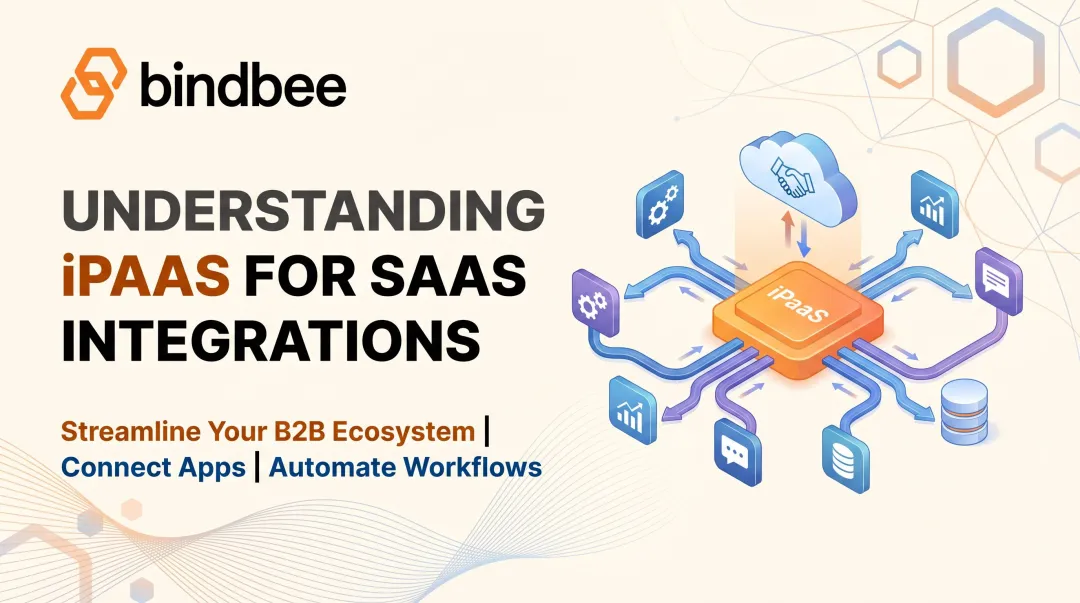
Embedded iPaaS is integration infrastructure a SaaS company builds into its own product to create, deploy, and manage integrations for its customers. The SaaS company owns the roadmap and the product experience; customers connect their own accounts and data sources through it.
This is a different operating model than internal automation tools. Your engineering team isn't building a workflow for itself. It's building infrastructure that has to work reliably across dozens, hundreds, or thousands of customer accounts, each with different credentials and configurations.
Capabilities Worth Evaluating
Before picking an embedded iPaaS vendor, check for:
- Multi-tenant deployment with separate credentials, settings, and data boundaries per customer
- Managed authentication, including OAuth, API keys, token refresh, and secure credential storage
- Reusable integration logic, configurable field mapping, webhooks, scheduled or incremental syncs, retries, and error handling
- Monitoring and support visibility, including logs and alerts across every customer integration
These capabilities matter most for HR Tech and benefits platforms, where employee, dependent, eligibility, enrollment, and carrier data needs to move reliably and stay current. A stale sync in a benefits platform doesn't just create a bug report; it can mean an employee loses coverage visibility.
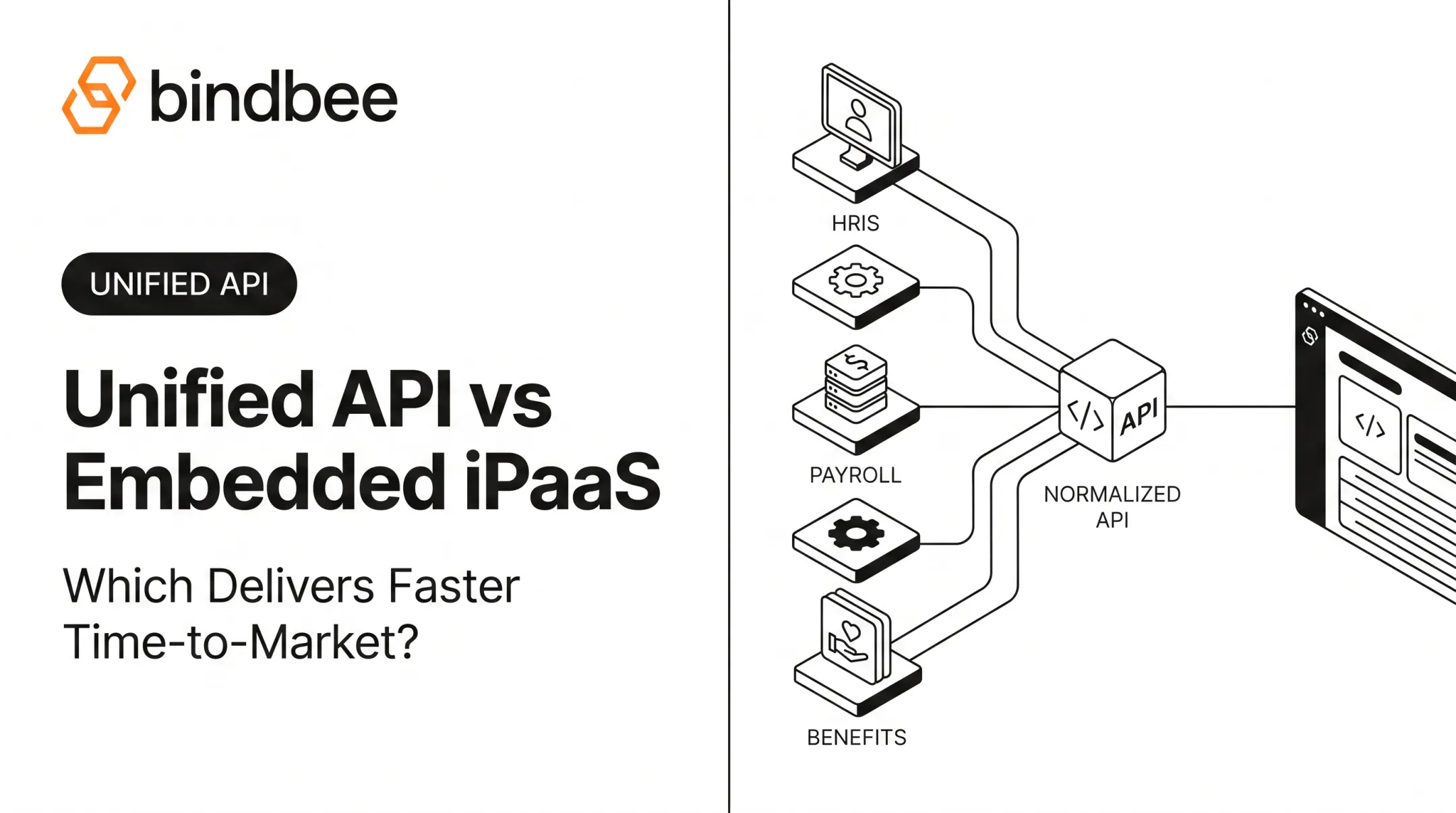
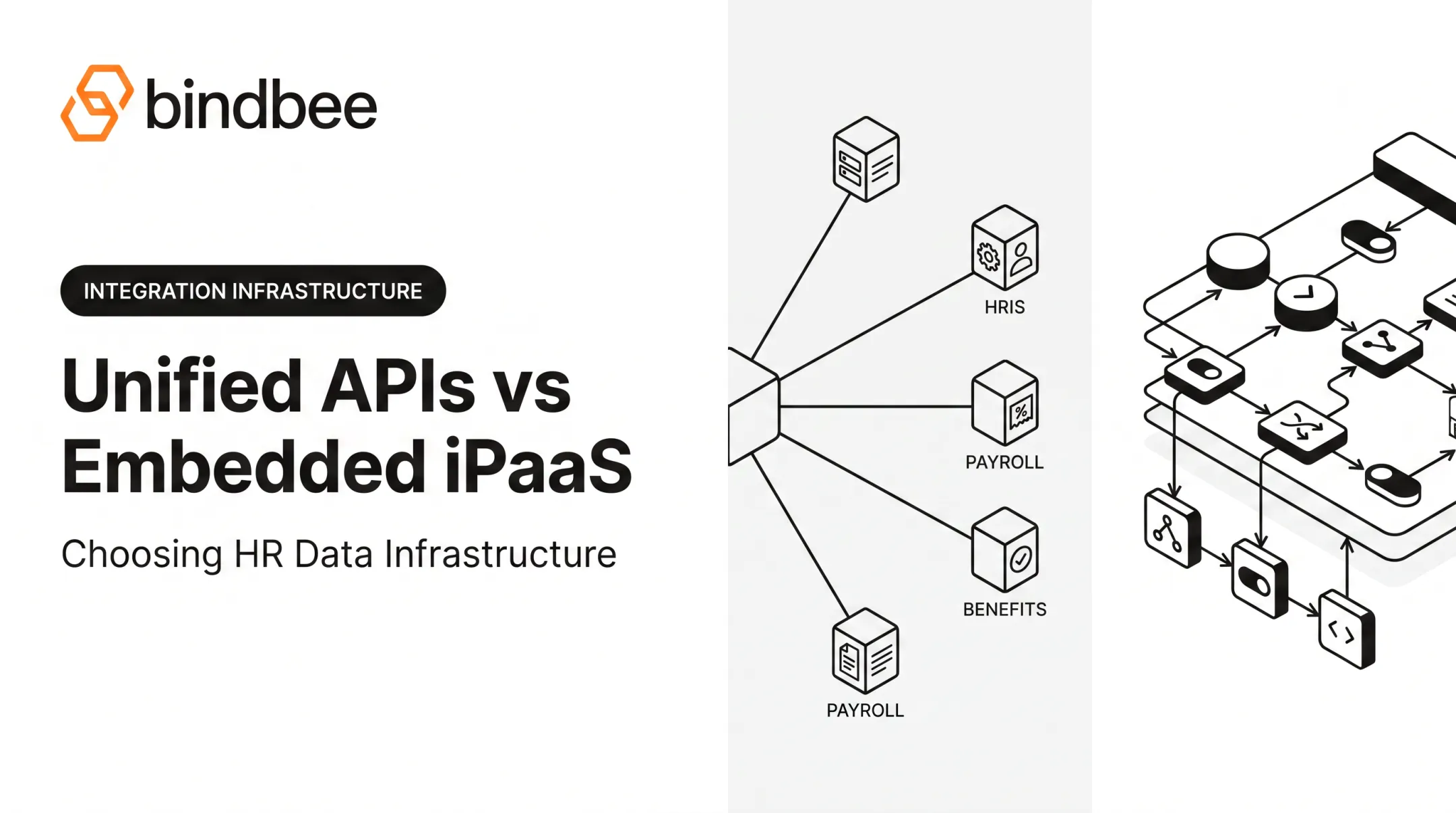
This is the gap Bindbee was built to close. Its unified API and benefits-first data models let HR and benefits software companies connect to 60+ HRIS, payroll, benefits, and carrier systems through one consistent integration layer, rather than building and maintaining dozens of point-to-point connections.
Where Embedded Integrations Show Up in Practice
Picture a benefits administration platform. Instead of asking its customers to export spreadsheets, it lets them connect their HRIS or payroll system directly and sync eligibility, dependent information, coverage elections, and enrollment changes automatically.
This pattern shows up across related product categories:
- Payroll platforms syncing deduction and compensation data
- Employee engagement and gifting products pulling roster and hire-date information
- Insurtech and TPA platforms needing census and eligibility data
- Immigration services requiring real-time employee data from HR systems
Appsmith, a developer platform, moved its customer-facing integrations onto an embedded iPaaS. The team reported bringing new integrations live within a day instead of three to six months, with roughly 60-70% less engineering effort per integration, according to Appsmith's engineering blog.

Results like these are self-reported, but they illustrate the leverage embedded infrastructure creates.
What Is Traditional iPaaS?
Traditional iPaaS, sometimes called enterprise iPaaS, is a platform built to connect and automate applications within one organization. Think of the tools your internal IT, operations, sales, or finance team uses to wire together a CRM, an ERP, a ticketing system, and a messaging app.
Where It Shines
Traditional iPaaS platforms are genuinely good at:
- Low-code or no-code workflow construction for common internal automations
- Pre-built connectors and templates for popular business applications
- Faster setup than building an integration from scratch internally
- Triggers, actions, field mapping, and scheduled jobs for departmental workflows
The model shifts, however, the moment a SaaS company tries to use it for customer-facing work. Customers need their own credentials, their own configurations, their own permissions, and their own support path. Traditional iPaaS tools weren't built with that tenant-by-tenant structure in mind.
The Limitations for Customer-Facing Work
Using a traditional iPaaS as your customer integration strategy tends to create friction:
- Limited product control since customers configure workflows outside your app
- Fragmented support visibility when something breaks on a customer's end
- Difficulty handling complex or bi-directional syncs at scale
- Third-party branding that breaks the in-product experience
- Inability to package the integration as a native product feature
A Realistic Internal Use Case
A common traditional iPaaS workflow looks like this: a new Zendesk ticket triggers a Salesforce case and posts a notification to a Slack channel, keeping an internal support team in sync without manual work.

Sometimes a SaaS company will expose a connector through a traditional iPaaS, usually for an uncommon integration requested by one or two customers that doesn't justify native development. That's a reasonable stopgap.
Just be clear-eyed about it: a connector marketplace listing is not the same as a true embedded integration. Customers may still be responsible for configuring, paying for, and troubleshooting the workflow themselves.
Embedded iPaaS vs Traditional iPaaS: What Is Better?
Neither platform wins outright. The right answer depends on one question: is this integration internal automation, or is it a customer-facing product capability?
Choose embedded iPaaS when integrations are:
- Requested by multiple customers, not a single edge case
- Central to activation, onboarding, or retention
- Expected to be branded and delivered in-app
- Complex enough to need bi-directional sync and per-customer configuration
Choose traditional iPaaS when:
- The workflow is internal and owned by one department
- The integration is relatively simple or still experimental
- You need a temporary home for an obscure customer request that hasn't earned native product investment yet
Evaluation Criteria That Actually Matter
When comparing vendors in either category, weigh:
- Tenant isolation and credential management - how are customer-scoped credentials, permissions, and data boundaries handled?
- API coverage and sync depth - does it support custom fields, bi-directional sync, webhooks, incremental updates, and rate-limit handling?
- Developer experience - version control, testing, deployment workflows, and support for custom connectors
- In-app experience - white-labeling, integration discovery, and customer self-service
- Observability - logs, alerting, audit trails, and visibility into customer-level failures
HR and benefits platforms should weight data freshness and relationship data especially heavily. Dependent records, benefits elections, and eligibility changes need to be traceable across systems, not just synced once and forgotten.
A simple framework: pick embedded iPaaS if integrations are part of the product promise and need to scale across customers. Pick traditional iPaaS if the goal is internal operations. Consider running both if you need native strategic integrations alongside a lower-cost path for long-tail requests.

Real-World Examples and Case Studies
Healthee, a digital health benefits platform, used to spend weeks on back-and-forth data requests every time it onboarded a new employer. Custom integrations took over two months each to build.
After adopting Bindbee's unified API, employers now connect their HRIS in minutes and go live the same day.
That shift didn't just save engineering time. It removed a recurring bottleneck that had been slowing down every new customer launch, regardless of company size.
A similar pattern shows up outside HR Tech. Harbour, a contract-management platform, initially built a Zapier connector for customers, but that approach required customers to leave the product entirely and pay separately to use it.
After moving to an embedded iPaaS, Harbour's lead engineer reported saving roughly half a year of engineering effort compared to building the integrations in-house, according to Paragon's customer story.
The practical takeaway:
- Internal workflow automation can comfortably stay on a traditional iPaaS
- Customer-facing HR or benefits connectivity, where data accuracy and onboarding speed affect retention, usually needs a reusable embedded layer
If your team is fielding repeated HRIS or payroll integration requests, or managing employment data that needs to stay current across 60+ systems, it's worth evaluating whether Bindbee's unified API fits your roadmap better than building and maintaining each connection yourself.
Conclusion
Traditional iPaaS is generally the better fit for internal workflows: departmental automations, one-off connector requests, and processes that live entirely inside your own organization. Embedded iPaaS is the stronger fit when integrations need to be delivered, managed, and experienced as part of your SaaS product itself.
Evaluate your situation against the factors that matter most:
- Customer ownership
- Multi-tenancy needs
- Data sensitivity
- Integration complexity
- User experience expectations
- Observability requirements
Map your use case to those criteria before you commit to a platform.
Frequently Asked Questions
What is an embedded iPaaS?
Embedded iPaaS is infrastructure that SaaS companies use to build and deliver integrations as features inside their own product. It typically includes reusable integration logic, multi-tenant management, authentication handling, and monitoring across customer accounts.
What is the difference between PaaS and iPaaS?
PaaS provides a general platform for building, running, and managing applications. iPaaS is specifically focused on connecting applications, APIs, data, and workflows between systems, whether internal or customer-facing.
What is the difference between embedded iPaaS and traditional iPaaS?
Embedded iPaaS delivers integrations as a customer-facing product capability, owned and branded by the SaaS company. Traditional iPaaS automates internal business processes for a single organization's own teams and tools.
When should a SaaS company use an embedded iPaaS?
Use embedded iPaaS when integrations are strategically important, requested across multiple customers, need to be branded and in-app, or involve complex, customer-specific synchronization. It also reduces ongoing engineering maintenance compared to building each connection natively.
Can a company use both an embedded iPaaS and a traditional iPaaS?
Yes. Many SaaS companies use embedded iPaaS for strategic, customer-facing integrations and keep a traditional iPaaS for internal workflows or low-priority, long-tail requests that don't justify native product development.