
Introduction
According to the MuleSoft 2026 Connectivity Benchmark Report, IT teams spend 35% of their time on integration projects. That's time not going toward shipping features, closing deals, or improving core product experience.
For HR Tech and Benefits platforms, that number carries a sharper edge. Every week spent maintaining a broken HRIS connector is a week of delayed roadmap, a stalled enterprise onboarding, or an eligibility sync that silently fails before open enrollment. Those costs multiply as you scale.
None of that is inevitable. Unified API connectors aren't inherently expensive. Costs escalate because of poor platform selection, misconfigured sync strategies, and unmanaged maintenance overhead that compounds with every new connected system. A platform that looks affordable at 20 customers looks very different at 200.
This guide breaks down exactly where costs originate across three dimensions: upstream decisions, active configuration management, and surrounding infrastructure. It gives you concrete tactics to address each one.
Key Takeaways
- Connector costs compound. Maintenance overhead and per-account pricing dwarf initial setup costs at scale
- Four cost drivers dominate: maintenance burden, sync misconfiguration, pricing model misalignment, and compliance overhead
- Platform selection decisions, especially choosing domain-specific, zero-maintenance APIs, create the largest long-term savings
- Incremental syncing, webhook triggers, and field scoping cut infrastructure costs without sacrificing data quality
- One unified API layer replaces dozens of point-to-point integrations, shrinking your maintenance footprint to a single surface
How Costs Around Unified API Connectors Typically Build Up
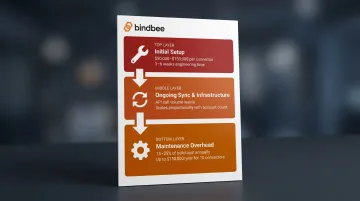
Connector costs rarely appear as a single budget line. They accumulate across three layers, and the compounding effect is what catches most teams off guard.
Layer 1: Initial Setup
Building a single advanced API integration from scratch runs $50,000 to $150,000+, with 3–6 weeks of engineering effort per connector. That number feels manageable for one integration. Multiply it by ten HRIS systems and it becomes a significant capital commitment before you've served a single enterprise customer.
Layer 2: Ongoing Sync and Infrastructure
Full syncs on fixed schedules generate unnecessary API call volume. For employee lifecycle data, which changes episodically, not continuously, an untuned sync strategy runs up infrastructure costs that stay invisible in early deployments but surface fast once you cross a few dozen enterprise accounts.
Layer 3: Maintenance Overhead
This is where costs become fixed and recurring. Annual maintenance runs 15–25% of the original build cost, and can reach 50% in mature phases. For a company maintaining ten in-house integrations, that's roughly $150,000 per year in maintenance alone, equivalent to a fully-loaded senior engineer.
Every new connector added multiplies this exposure independently. Each of the following becomes its own recurring engineering task:
- Authentication changes triggered by provider security updates
- Schema updates when upstream systems add or rename fields
- Rate limit shifts that break sync schedules without warning
None of these tasks ship features. They exist purely to keep existing integrations from breaking.
Key Cost Drivers for Unified API Connectors
Understanding where cost originates matters more than chasing generic savings. Four drivers account for the majority of scaling costs.
Connector Maintenance Burden
Third-party HRIS, payroll, and benefits APIs change without warning. Authentication methods rotate, field schemas shift, and rate limits get restructured on the upstream vendor's timeline. Teams maintaining native or lightly abstracted connectors absorb every one of those changes as recurring engineering cost.
This driver compounds with connector count. A team managing one native connector has one maintenance surface. A team managing fifteen has fifteen: each capable of breaking independently and triggering an incident at the worst possible moment, whether open enrollment, payroll processing, or benefits renewals.
Sync Frequency and Data Volume Misconfigurations
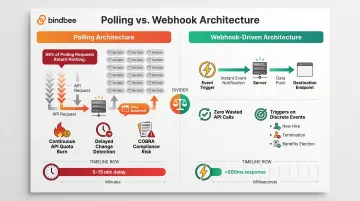
In most production polling architectures, nearly 99% of requests return "nothing changed." Only about 1% carry actionable data. That means polling-based architectures burn API quota and compute on requests that produce nothing, and that waste grows directly with sync frequency and connected account volume.
Full syncs that pull entire employee records on a schedule make this worse. Field-level change detection can reduce data transfer volumes by 60–95% compared to full record synchronization.
Pricing Model Misalignment
Per-connected-account pricing ties cost directly to customer growth. A Series B HR Tech platform with 500 customers and 1,500 connections on a $65/connection/month model pays approximately $97,500/month. Usage-based alternatives for equivalent API call volume can run closer to $3,000/month.
Teams that select platforms based on early-stage entry pricing without modeling costs at 3–5× their current customer volume often discover this mismatch too late to renegotiate without switching.
Compliance and Security Overhead
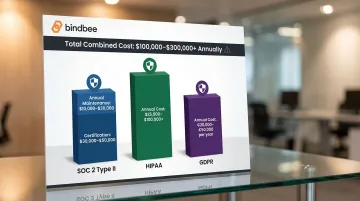
HR, payroll, and benefits data requires SOC 2 Type II, HIPAA, and GDPR compliance, and these costs stack:
- SOC 2 Type II: $30,000–$50,000 to certify, plus $10,000–$30,000 in annual maintenance for most SMBs
- HIPAA: $25,000–$100,000+ annually for enterprise platforms
- GDPR: €20,000–€50,000 per year for a 50-person SaaS company
Teams using non-certified connector infrastructure must build and audit their own compliance layer on top. That obligation grows with data volumes and regulatory scrutiny. It never shrinks.
Cost-Reduction Strategies for Unified API Connectors
Cost reduction here isn't generic budget cutting. The right tactic depends on which dimension is driving your costs: upstream decisions, active configuration, or surrounding infrastructure.
Strategies That Change Upstream Decisions
The highest-leverage interventions happen before the first connector goes live. Poor choices at the platform selection stage create compounding costs that no amount of operational tuning can fully offset.
Choose domain-specific unified APIs over generic platforms.
Generic multi-category unified APIs that span CRM, file storage, e-commerce, and HR often charge for breadth that HR Tech and Benefits platforms never use. More critically, they normalize only basic employee fields, missing the benefits-specific data structures that actually matter:
- Dependent relationships and coverage tiers
- COBRA qualifying events and effective dates
- Deduction codes and benefit class assignments
- Waiting period overrides and enrollment elections
Platforms like Bindbee are built specifically for HRIS, payroll, and benefits workflows, surfacing these fields as first-class normalized models. When an enterprise customer has a custom field like "benefit class assignment," a domain-specific model exposes it. A strict canonical schema from a generic provider often doesn't.
Evaluate three-year TCO, not first-year build cost.
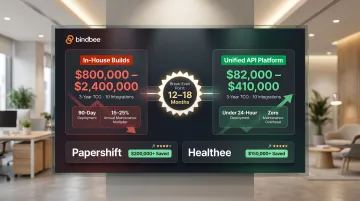
Building and maintaining 10 in-house integrations carries a three-year TCO of $800,000 to $2.4 million, compared to $82,000–$410,000 using a unified API platform. The break-even point for buy decisions typically arrives within 12–18 months once maintenance labor is factored in.
Papershift reduced integration deployment time from 90 days to under 24 hours after moving to Bindbee, saving $200,000+ annually in development resources. Healthee cut deployment from 8–12 weeks to 24–48 hours, saving $150,000+ per year. The maintenance multiplier makes native builds expensive faster than most teams anticipate.
Prioritize zero-maintenance connector infrastructure.
Platforms that handle API versioning, schema changes, and authentication updates automatically eliminate a recurring cost that compounds with each new connected provider. Bindbee's zero-maintenance model covers all of this. When a provider like UKG or Rippling updates their API, Bindbee's infrastructure absorbs the change without requiring any code changes from customers.
Setup takes less than one day compared to 4–8 weeks for native API implementations. For Phin, an employee gifting platform, adopting this model translated to a 76% reduction in customer onboarding time and $115,000+ in annual development savings.
Model pricing at your target scale before selecting a vendor.
Per-connected-account pricing structures cause integration spending to grow linearly, or faster, with customer success. Evaluate any vendor's pricing at 2–3× your current account volume. Bindbee's flat-fee per active connection model includes unlimited API calls, data syncs, and webhook events, with volume discounts for high connection counts. That predictability matters when you're projecting unit economics across 500+ enterprise customers.
Strategies That Change How Connectors Are Managed
Even well-selected platforms generate avoidable costs when connectors are operated without configuration discipline.
Shift from full syncs to incremental syncs with field-level scoping.
Configure syncs to fetch only changed records since the last successful sync, and scope fields to what the downstream product actually consumes. Bindbee runs automatic incremental syncs after the initial pull, keeping data current without redundant full-record transfers.
Employee lifecycle data is inherently event-driven. New hires, terminations, and open enrollment changes are discrete events, not a continuous stream. Full syncs on a fixed schedule for data that rarely changes are pure waste.
Replace polling with webhook-driven event notifications.
Polling to detect changes burns API quota regardless of whether changes have occurred. With nearly 99% of requests returning no new data, polling is mostly a cost with occasional value. Bindbee's webhook infrastructure detects changes in source HRIS systems and fires structured event notifications the moment they happen: new hires, terminations, dependent changes, benefits elections.
COBRA compliance makes this concrete. The 14–44 day notice window means a polling-based architecture that checks every few hours introduces real legal risk; a webhook that fires on termination detection doesn't.
Implement caching for stable reference data.
Employee demographic fields, plan structures, and employer configurations don't change frequently. Caching this data at the connector or application layer reduces redundant API calls for data that hasn't changed, lowering both infrastructure costs and third-party rate limit exposure.
Centralize connector observability.
Undetected sync failures cause data staleness, support escalations, and manual remediation that carry real labor costs. Bindbee's centralized monitoring dashboard provides searchable logs, sync health status, issue tracking, and automated retry logic for failed syncs. When persistent issues occur, webhook notifications alert your team before customers discover stale data themselves.
Budgie Health reported a 90% reduction in integration management overhead after adopting Bindbee's monitoring and support infrastructure.
Strategies That Change the Context Around Connectors
In many scaling environments, the surrounding infrastructure (legacy dependencies, fragmented point-to-point integrations, per-customer onboarding workflows) is the primary cost driver, not the connector platform itself.
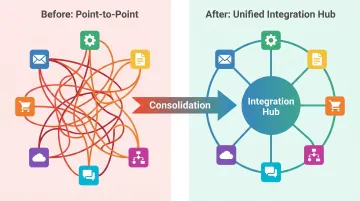
Consolidate point-to-point integrations into a single unified API layer.
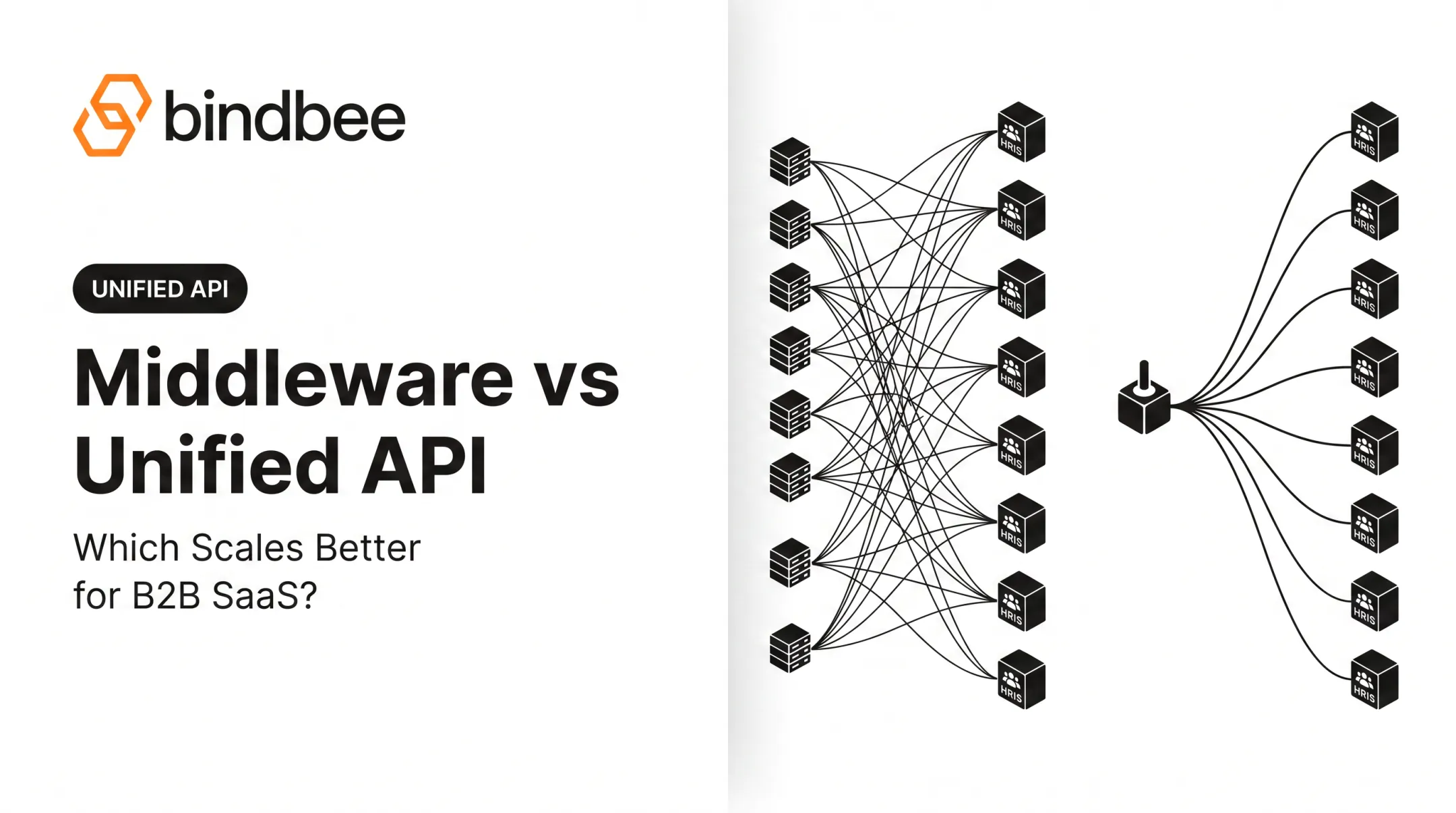
Organizations that built separate connectors for each HR system over time carry disproportionate maintenance overhead: multiple codebases, multiple authentication flows, multiple monitoring surfaces, all with independent failure modes. Consolidating into one unified API layer eliminates that overhead.
Cypherworx previously built direct connections to multiple HRIS platforms, supplementing gaps with manual SFTP processes. Maintenance was unsustainable. After consolidating to Bindbee, they saved 5 man-months of engineering time and $150,000+, and cut customer onboarding from 24 days to a few hours.
Use SFTP-to-API bridges for legacy system compatibility.
Many enterprise HRIS and carrier systems still export data through flat-file SFTP rather than REST APIs. Building custom adapters for each legacy source is brittle and expensive.
Bindbee's built-in SFTP-to-API bridge supports systems like bswift, Plansource, isolved, and ADP Workforce Now, automatically parsing CSV, XML, and fixed-width formats and normalizing them to the same unified schema as direct API connections.
Legacy file-based systems appear identical to modern REST API systems through the same endpoints.
Standardize customer onboarding with self-serve authentication.
Ad-hoc credential collection for each new customer creates engineering and customer success overhead that scales with account volume. Bindbee's Magic Link component lets customers authenticate their HR systems in under 10 minutes without sharing credentials with your servers. No IT back-and-forth, no manual credential handling, no implementation bottleneck.
Compport reduced client onboarding by 74% and cut integration deployment from 8 weeks to 48 hours, in part by eliminating the manual setup process that previously gated each new customer connection.
Align compliance infrastructure with your connector platform.
SOC 2 + HIPAA + GDPR compliance for HR and benefits data can easily reach $100,000–$300,000 annually before accounting for engineering time. Teams using non-certified connector infrastructure must build and audit their own compliance layer on top.
Bindbee carries SOC 2 Type II, ISO 27001, HIPAA, and GDPR-ready certifications, managing data handling to these standards across all connected systems. For enterprise customers operating across US, EU, and APAC jurisdictions, Bindbee also supports private cloud deployment on AWS, Azure, and GCP with multi-region data residency, eliminating the need to build separate compliant infrastructure per geography.
Conclusion
Connector scaling costs are controlled at three distinct layers: platform selection upstream, sync configuration at the operational level, and legacy consolidation for the foundational overhead that tuning alone can't remove. Each layer requires a different type of decision. The upstream choices carry the most long-term weight.
Cost efficiency in connector infrastructure isn't a one-time fix. As customer volumes grow and new HRIS systems enter your stack, the cost profile shifts. Teams that build cost awareness into their connector governance early, before scale pressure hits, stay ahead of remediation work that compounds quickly once ignored. The teams that maintain control are the ones that treat cost as an architectural concern, not an afterthought.
Frequently Asked Questions
What is the biggest hidden cost when scaling unified API connectors?
Connector maintenance overhead (absorbing API version changes, schema updates, and authentication shifts across each connected provider) becomes the dominant hidden cost at scale. For platforms maintaining ten or more native connectors, annual maintenance alone can reach $150,000, often exceeding the original build cost within two years.
Is it cheaper to build native integrations or use a unified API connector platform?
Native builds appear cheaper initially but carry compounding maintenance, compliance, and opportunity costs. The three-year TCO gap between in-house builds ($800K–$2.4M for ten integrations) and a unified API platform ($82K–$410K) is significant. The break-even point arrives within 12–18 months once maintenance labor is factored in.
How does per-connected-account pricing affect total cost at scale?
Per-connected-account pricing ties integration spend directly to customer growth. A platform with 500 customers and 1,500 connections at $65/connection/month pays roughly $97,500/month. Model any vendor's pricing at 2–3× your current account volume before committing. Pricing structures that look reasonable at 50 customers can become unviable at 500.
How can sync frequency settings reduce unified API infrastructure costs?
Switching from scheduled full syncs to incremental, change-only syncs can reduce data transfer volumes by 60–95%. For employee lifecycle data, which changes at discrete events like new hires or terminations, incremental sync eliminates the vast majority of redundant API calls without sacrificing data freshness.
What role does connector maintenance play in long-term scaling costs?
Every connected HRIS, payroll, or benefits system demands ongoing attention as providers update their APIs. That's a recurring engineering cost that compounds with each connector added. Unified API platforms that handle versioning, schema changes, and authentication updates automatically convert that variable labor cost into a predictable platform fee.
How do compliance requirements like SOC 2 and HIPAA affect unified API connector costs?
HR and benefits data handling requires formal compliance certification, and stacking SOC 2 + HIPAA + GDPR can cost $100,000–$300,000+ annually for a mid-size HR Tech platform. Teams using non-certified connector infrastructure must build and audit their own compliance layer on top. Bindbee already holds SOC 2 Type II, HIPAA, and GDPR certifications, so platforms building on it skip that duplicated investment entirely.