

Top 20 Integration Platforms for Enterprise Needs 2025

Summarise the blog with AI
Enterprise integration platforms have evolved well beyond simple middleware. Today's top platforms range from broad iPaaS solutions to purpose-built vertical APIs, and the right choice depends heavily on whether you're solving general workflow automation or domain-specific data integration at scale.
This guide covers the top integration platforms for enterprise needs, with a focus on what each is actually best suited for.
What Enterprises Actually Need from Integration Platforms
Enterprise integration requirements typically include: connectivity across dozens or hundreds of systems, reliable data synchronization at scale, strong security and compliance posture, support for both cloud and on-premise systems, and maintainability as systems evolve.
For HR Tech and benefits companies specifically, add: deep HR data models, write-back support for payroll and deductions, and normalized employment data across diverse HRIS vendors.
Top Integration Platforms for Enterprise
1. MuleSoft Anypoint Platform
The incumbent enterprise iPaaS. Broad connectivity, powerful API management, strong governance. High total cost of ownership and requires dedicated MuleSoft expertise. Ratings: 4.2/5 across TIBCO integration products. Rated for real-time integration at enterprise scale.
Best for: Large enterprises with complex, multi-system architectures and dedicated integration teams.
2. IBM App Connect
Strong for enterprises already in the IBM ecosystem. Good for connecting legacy systems with modern cloud apps. Enterprise-grade reliability with high implementation complexity.
Best for: Enterprises with heavy IBM infrastructure investments.
3. Boomi
Balanced between power and usability. Good connector library, strong for ERP and CRM integration. Ratings: 4.6/5 across 250+ reviews. Noted for workflow automation and embedded integration tooling. Better for general business process integration than HR-specific depth.
Best for: Mid-market to enterprise teams needing broad connector coverage with low-code tooling.
4. Workato
Strong for cross-functional automation across enterprise SaaS. Business-user-friendly with strong enterprise security. Limited in HR data depth for benefits and payroll use cases.
Best for: IT and operations teams automating workflows across CRM, ERP, and HR systems.
5. Bindbee — Best for HR Tech Enterprise Integration
For enterprises building HR Tech or benefits products, Bindbee provides a unified employment data API covering 102+ HRIS, ATS, and payroll systems. Unlike general iPaaS, Bindbee normalizes HR-specific data models — employees, compensation, deductions, dependents — so enterprise products don't build per-vendor connector logic. SOC 2 Type II, HIPAA, ISO 27001 certified.
Best for: Enterprise HR Tech, benefits, and payroll platforms that need deep, normalized employment data across diverse HRIS environments.
Choosing the Right Platform
General enterprise iPaaS platforms solve workflow orchestration across diverse systems. They're the right choice when you need to connect dozens of business applications across CRM, ERP, and HR with flexible workflow logic.
For HR Tech specifically, depth matters more than breadth. A platform that connects to 500 apps but returns shallow employee data isn't useful when your product needs compensation history, benefits deductions, or dependent records from 50 different HRIS platforms.
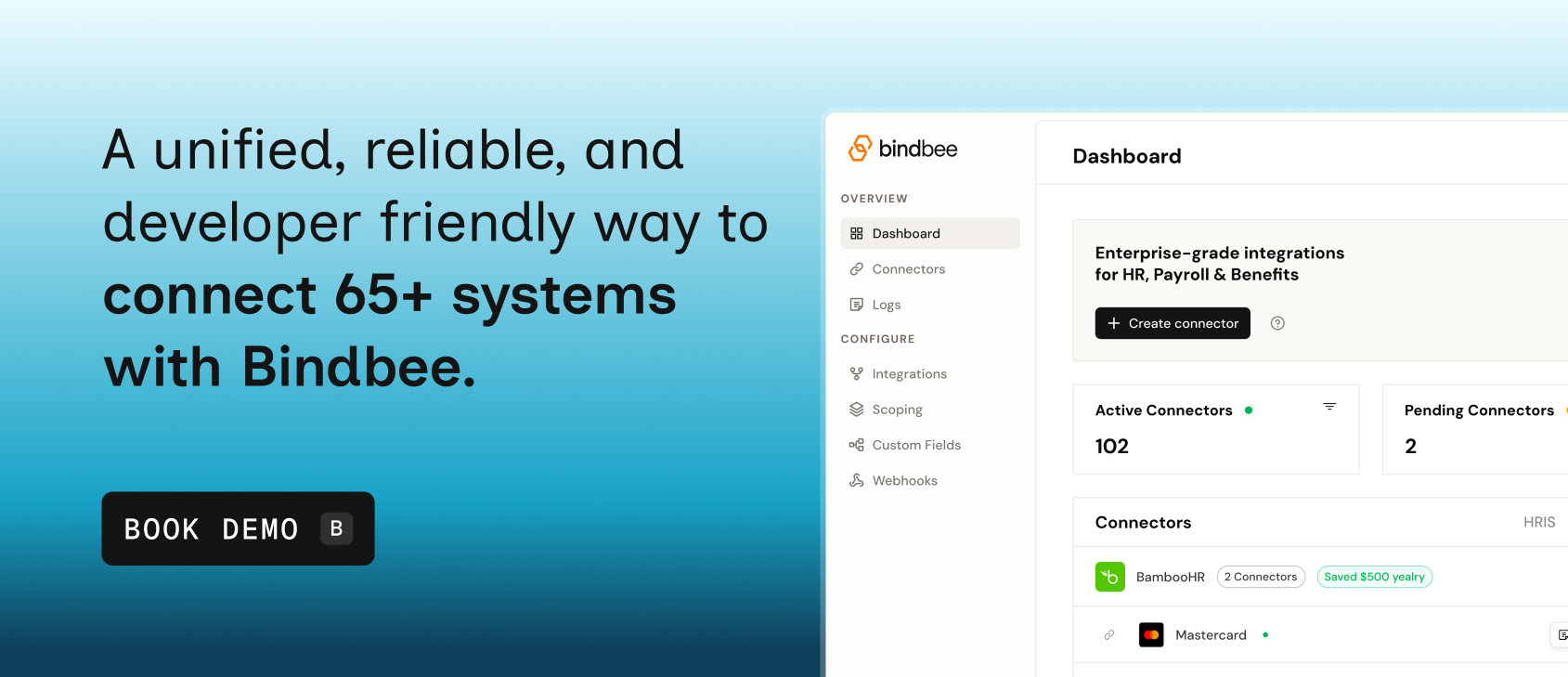
Book a demo to see how Bindbee handles enterprise HR Tech integration needs.