

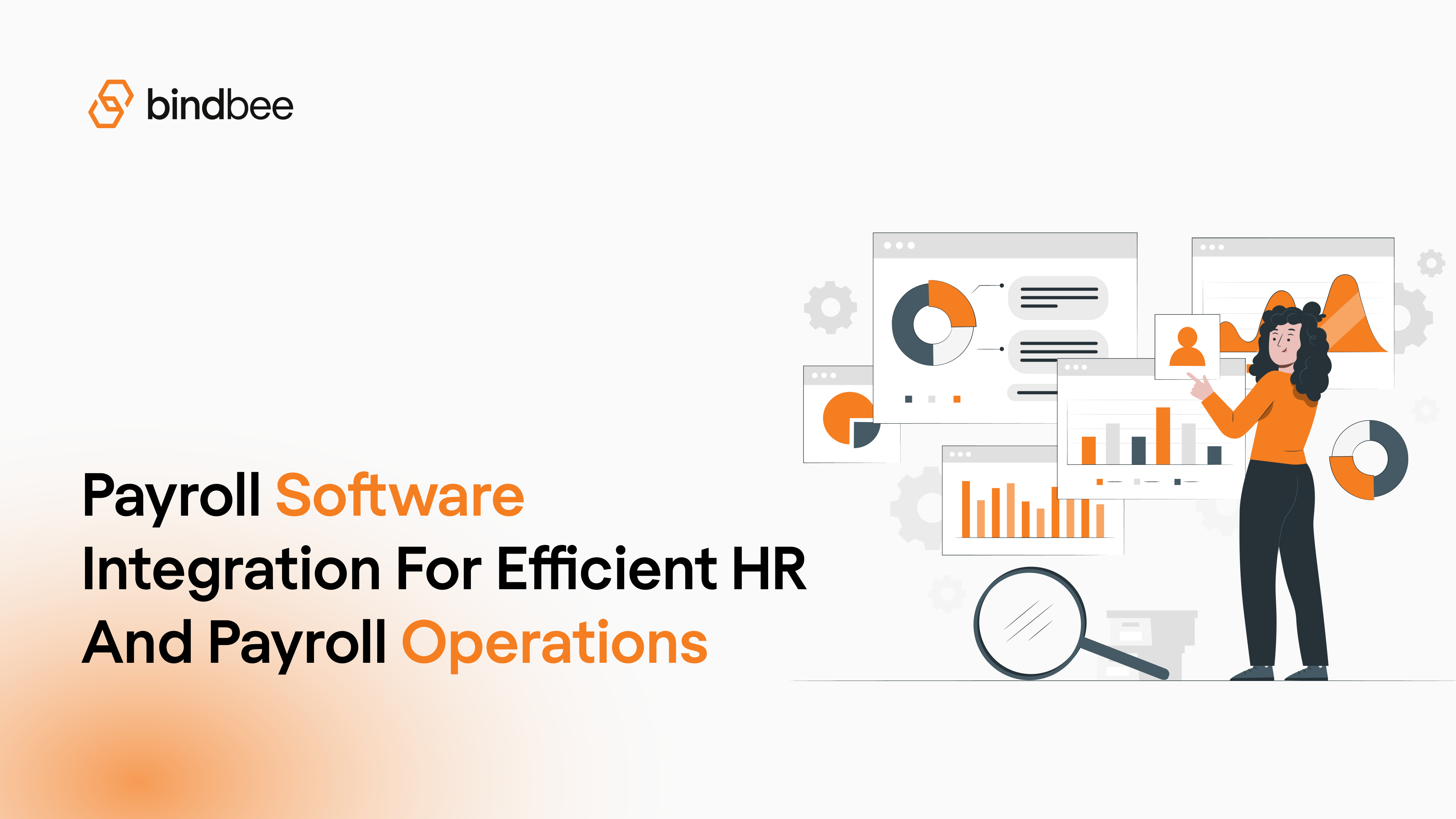
Payroll Software Integration for Efficient HR and Payroll Operations
Summarise the blog with AI
Payroll software integration is one of the highest-leverage investments an HR Tech platform can make. When payroll data flows automatically between systems, employer clients spend less time on manual reconciliation, deductions stay accurate, and your product becomes embedded in the operational workflows that run every two weeks without fail.
This guide covers how to approach payroll software integration effectively, common pitfalls, and what a production-grade implementation looks like.
What Payroll Software Integration Actually Involves
Payroll integration isn't just connecting to a payroll API. It involves: pulling employee and compensation data to keep your product current, writing deduction and contribution changes back before payroll runs, handling real-time events like new hires and terminations, and maintaining data accuracy across employers who use different payroll systems.
The challenge scales with the number of payroll systems you need to support. Each system has different authentication, different data models, different API versions, and different rates of change.
Common Integration Patterns
Pull-Only (Read)
Your product reads payroll and employee data from the connected system. Used for analytics, reporting, and dashboards. Simpler to implement but doesn't support deduction write-back.
Bidirectional (Read + Write)
Your product reads data and pushes changes back. Required for benefits enrollment, deduction management, and contribution updates. More complex but necessary for operational use cases.
Event-Driven
Your product reacts to payroll events via webhooks. New hire triggers enrollment workflow. Termination triggers offboarding. Compensation change updates analytics. Lowest latency, highest accuracy.
Where Integrations Break
Most payroll integration failures aren't connection failures. They're data failures: mismatched employee IDs between systems, deduction amounts that don't match payroll's expected format, timezone issues with pay dates, or schema changes that silently break field mapping.
Building monitoring and validation into the integration layer — not just the happy path — is what separates reliable integrations from ones that work 95% of the time.
How Bindbee Handles Payroll Integration
Bindbee delivers clean, normalized, payroll-ready data from 110+ HRIS, ATS, and payroll systems. Instead of managing one-off connectors per payroll vendor, you connect once to Bindbee and get consistent employee, compensation, and deduction data across your entire employer base.
- 110+ payroll and HRIS connectors
- Normalized compensation and deduction models
- Deduction write-back support
- Real-time webhooks for payroll events
- Built-in monitoring and error handling
- SOC 2, HIPAA, ISO 27001
Book a demo to see how Bindbee handles payroll software integration across 110+ systems.