
Paragon vs Unified: Choosing the Right Integration Platform
Summarise the blog with AI

Did you know that only 26% of organizations are fully integrated? That means the vast majority are still dealing with disconnected systems, data silos, and manual workflows that slow down operations and frustrate customers.
For HR Tech and benefits platforms, this problem isn't just inconvenient; it's a growth blocker. Every enterprise customer runs different HRIS and payroll systems. Without integrations, you lose deals, delay onboarding, and burn engineering hours on point-to-point connectors that need constant maintenance.
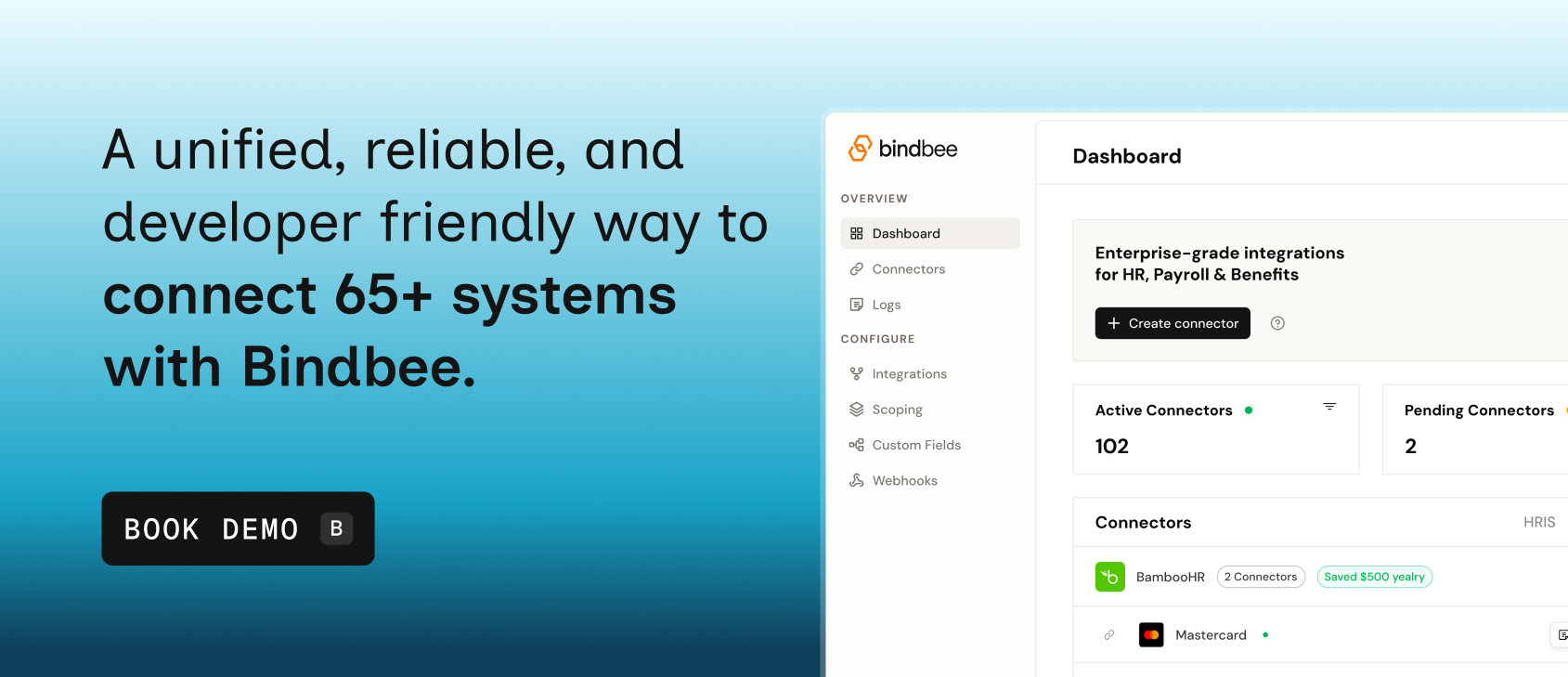
That's where a Unified API changes the game. Instead of building and managing separate integrations for each HRIS, ATS, or payroll provider, you connect once to a Unified API and instantly access dozens of systems through a single, standardized interface. Platforms like Bindbee, which connect 65+ HRIS, payroll, ATS, and benefits systems through a consistent employment data model, are built exactly for this purpose.
This guide explains unified APIs, how they differ from embedded iPaaS tools like Paragon, and when each approach actually fits your product needs.
Paragon vs Unified API: At a Glance
The core distinction lies in what problem each tool solves:
- Paragon is a workflow automation and embedded integration platform. It's built for SaaS teams that want to offer their users configurable, visual integration workflows without building the underlying infrastructure from scratch.
- Unified APIs like Bindbee are built specifically for standardized data access across a category of systems. Instead of building or wiring up integrations, you consume a normalized API that already understands the schema differences between Workday, ADP, UKG, Rippling, and 60+ others.
The right choice depends on whether you need workflow flexibility or deep, category-specific data coverage.
What is Paragon?
Paragon is an embedded integration platform (embedded iPaaS) that helps SaaS companies integrate with third-party apps by providing pre-built connectors and workflow tools, all embeddable directly in your product.
Key Features of Paragon:
- Workflow Automation: Build event-triggered, multi-step integration workflows across hundreds of apps.
- Embedded Integration UI: Give your customers a white-labeled integration dashboard to connect their own third-party tools.
- Broad App Coverage: Connects with hundreds of SaaS applications across CRM, marketing, productivity, HR, and more.
- No-Code Workflow Builder: Build and modify integration flows without writing backend code.
- Webhook and Event Support: Trigger workflows based on real-time events from third-party systems.
Paragon's Strengths:
- Excellent for general-purpose integrations across a broad set of SaaS apps.
- Strong workflow automation capabilities.
- Good developer experience for building embedded integrations.
- Useful when your customers need to configure their own integration logic.
Where Paragon Falls Short for HR Tech:
- Extensive Integrations: Connects with 250+ payroll and HRIS systems, including ADP, Gusto, Paychex, and Rippling, though the depth varies by connector.
- Shallow HR data models: Paragon treats HRIS integrations like any other app connection. It doesn't natively understand the nuances of HRIS schemas, payroll deduction logic, or benefits enrollment fields.
- No normalization: You still need to handle schema differences across systems on your side.
- Engineering overhead: Each HRIS integration still requires significant configuration and mapping work.
What is a Unified API?
A Unified API abstracts multiple systems in a specific vertical, like HR, payroll, or ATS, into a single, normalized API interface. Instead of connecting to each provider separately, you integrate once and get access to all of them through a consistent data model.
Key Features of Unified APIs:
- Single Integration Point: Connect to one API and access dozens of systems simultaneously.
- Normalized Data Models: Data from all systems is mapped to a consistent schema on your behalf.
- Deep Coverage Across 65+ HRIS Tools: Broad integration catalog designed for specific HR data use cases.
- Webhooks and Real-Time Sync: Get live updates when employee data changes across connected systems.
- Read and Write Support: Both pull data from and push updates back to connected systems.
Unified API Strengths for HR Tech:
- Fastest path to broad HRIS, payroll, and ATS coverage.
- No schema mapping required on your side; the unified API handles normalization.
- Deep HR-specific data models: benefits deductions, dependents, compensation, lifecycle events.
- Reduces ongoing engineering maintenance for API changes.
- Ideal for use cases that need clean, structured employee data across many employers.
Paragon vs Unified API: Side-by-Side Comparison


When to Choose Paragon
Paragon is a strong fit when your product's core value depends on connecting users to a wide variety of third-party apps beyond just HR, and when those users need configurable workflows they can manage themselves.
Choose Paragon if:
- You need to support integrations across a broad range of SaaS tools, like CRM, productivity, marketing, and collaboration apps, alongside HR systems.
- Your customers want to build and configure their own integration logic.
- Workflow orchestration is central to your product's value proposition.
- You want an embedded integration layer that's white-labeled in your UI.
When to Choose a Unified API
A Unified API like Bindbee is the right choice when your product's core functionality depends on clean, normalized HR, payroll, or ATS data at scale across many employer clients.
Choose a Unified API if:
- Your product needs structured employee data, payroll records, benefits deductions, or PTO balances from multiple HRIS providers.
- You want broad HRIS coverage without building or maintaining individual connectors.
- Schema normalization needs to happen at the API layer, not your application layer.
- Your customers are employers connecting their own HR systems to your platform.
- Real-time sync and write-back support are important for accuracy and operations.
Why Bindbee Stands Out as a Unified API for HR Tech
Bindbee is a Unified API built specifically for HR Tech, benefits, and payroll platforms. It abstracts the complexity of integrating with dozens of HRIS, ATS, and payroll systems into a single, normalized API.
What sets Bindbee apart:
- 65+ HRIS, payroll, ATS, and benefits systems with consistent, normalized employment objects
- Under 5-minute integration setup with built-in connection flows
- 27+ HR-specific data models covering employees, compensation, dependents, deductions, PTO, and more
- Read and write support across core HR objects
- Real-time webhooks for instant data updates
- SOC 2, HIPAA, and ISO 27001 certified
- No screen scraping; pure API-based, reliable data
Paragon vs Unified API: Making the Right Choice
The decision between Paragon and a Unified API isn't really about which tool is better; it's about which problem you're actually solving.
If your product needs to automate workflows across a broad set of third-party apps and let users configure their own integration logic, Paragon is built for that.
If your product needs clean, normalized employment data from dozens of HRIS, ATS, and payroll systems to power core functionality, a Unified API like Bindbee is the more efficient and scalable path.
For HR Tech and benefits companies specifically, the depth, normalization, and category focus of a Unified API typically provides a stronger foundation for integration at scale.
Book a demo with Bindbee to see how a Unified API approach can accelerate your integrations.