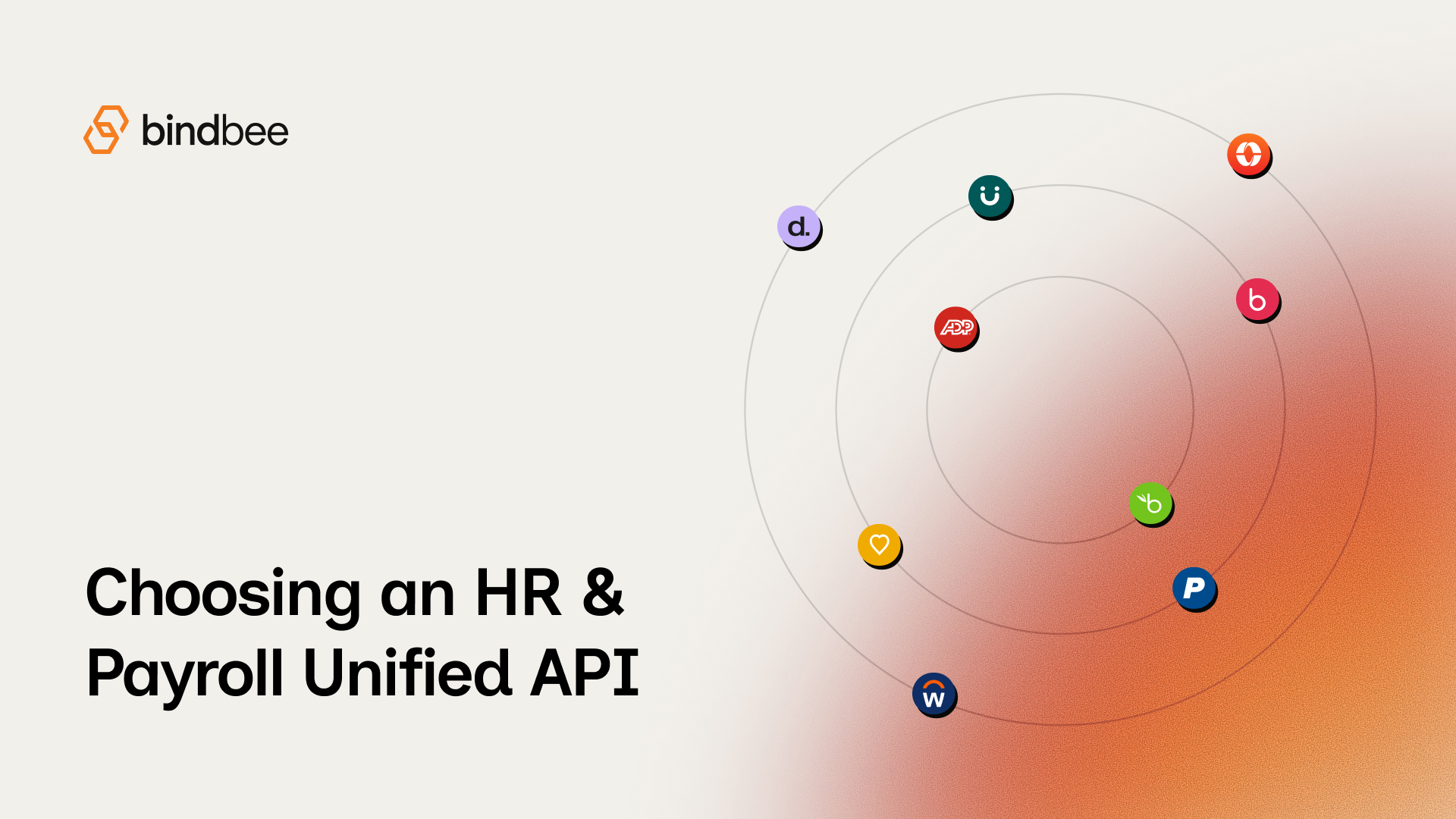


What Is Two-Way Sync? How It Keeps Your Data Accurate Across Systems
Summarise the blog with AI
You've seen it happen before. Payroll numbers don't match HR records. Customer data in your CRM is a week behind. Benefits enrollment shows one status while payroll deductions reflect another.
These aren't edge cases. They're what happens when systems that should be in sync are only updated periodically, or worse, manually.
Two-way sync changes this. Instead of data flowing in one direction on a schedule, it flows in both directions in real time. When something changes in one system, the other knows about it immediately.
This guide covers what two-way sync actually means, where it matters most for HR Tech and benefits platforms, and what it takes to implement it reliably.
What Is Two-Way Sync?
Two-way sync, also called bidirectional synchronization, is the continuous, automated exchange of data between two or more systems. Changes made in either system propagate to the other in real time or near real time, keeping both in a consistent state.
Contrast this with one-way sync, where data flows in a single direction (usually from a source system to a destination), and batch sync, where data is transferred on a schedule rather than continuously.
Why It Matters for HR Tech and Benefits Platforms
The HR data ecosystem is inherently bidirectional. Employee information originates in an HRIS, but changes to benefits, deductions, and compensation need to flow back. Payroll runs based on data that lives in HR, but the results of that run need to be accessible to finance and benefits platforms.
Without two-way sync:
- Benefits enrollment changes don't reach payroll before the next run
- Compensation updates in HR don't reflect in analytics tools
- New hire data created in HRIS doesn't trigger downstream provisioning
- Termination records sit in one system while access and deductions continue in another
Each of these is either a compliance risk, a payroll error, or a customer experience failure.
The Technical Requirements
Real two-way sync requires more than just an API connection. Here's what it actually takes:
Event-Driven Architecture
Polling-based sync, where your system periodically checks for changes, introduces latency and wastes API quota. True two-way sync uses webhooks or event streams so changes propagate the moment they happen.
Conflict Resolution
When both systems allow writes, you need rules for what happens when they conflict. If compensation is updated in both the HRIS and your platform simultaneously, which one wins? This logic needs to be explicit, not assumed.
Schema Normalization
Different systems represent the same data differently. A two-way sync layer needs to translate between schemas reliably, in both directions, without losing fidelity.
Idempotency
Sync events can be delivered more than once. Your system needs to handle duplicate events gracefully so the same change isn't applied twice.
Audit Logging
For compliance and debugging, you need a record of what changed, when, in which direction, and what the values were before and after.
How Bindbee Handles Two-Way Sync
Bindbee is built for bidirectional data flow across HR systems. It handles the complexity of connecting to 102+ HRIS, ATS, and payroll platforms and exposes a unified API that supports both reads and writes.
What this means in practice:
- Real-time webhooks for HR events like new hires, terminations, compensation changes, and benefits enrollment
- Write support for deductions, contributions, and compensation updates back to connected systems
- Normalized data models so your product works with consistent schemas regardless of the underlying HRIS
- Built-in conflict handling and retry logic so sync failures don't result in data loss
- Audit logs and monitoring for every sync event across all connected employers
Bindbee simplifies the process with a unified API for 102+ HR, payroll, and benefits systems, complete with built-in authentication, real-time sync, and compliance infrastructure.
Book a demo to see how Bindbee's two-way sync works across HR systems.