

SFTP vs API: How HR Platforms Should Choose
.avif)
Summarise the blog with AI
If you're building an HR integration in 2025, there's a good chance you've had this debate with your team: do we use SFTP or API? The answer isn't as simple as "APIs are always better." Here's a practical breakdown of when to use each, and how to handle environments where you need both.
What Is SFTP Integration?
SFTP (Secure File Transfer Protocol) is a batch-based data transfer method. One system exports data to a structured file (typically CSV or fixed-width), drops it on a secure server, and the receiving system picks it up on a schedule — hourly, daily, or weekly.
It's been around for decades and is still widely used in benefits administration, insurance carriers, and legacy payroll systems.
When SFTP still makes sense:
- The external system doesn't expose a modern API
- You're dealing with legacy benefits carriers or insurance systems
- The use case is bulk historical data transfer, not real-time sync
- Compliance or audit requirements need file-based records
The real downsides: Every sync introduces latency (the data is only as fresh as the last file drop). Error handling is reactive — you find out something broke after the fact. File format changes require coordination and testing across both sides.
What Is API Integration?
API integration connects systems programmatically, allowing real-time or near-real-time data exchange via HTTP requests and responses. With modern HRIS APIs, you can pull employee data on demand, subscribe to webhooks for lifecycle events, and push changes back (deductions, compensation updates) directly.
When API integration is the right call:
- Real-time accuracy matters — eligibility, deductions, payroll
- You need bidirectional sync (not just reading data, but writing back)
- Your integration needs to react to events: new hire, termination, life event
- You're scaling across many employer clients and need maintainable architecture
The gotchas: Not all HR systems have well-documented, stable APIs. Enterprise systems like Workday have APIs that require significant implementation effort. Rate limits, authentication complexity, and API versioning add overhead.
The Practical Reality: Most Teams Need Both
If your customers include a mix of modern mid-market companies and older enterprise accounts, you'll run into both scenarios. A Rippling or BambooHR customer expects real-time API sync. An employer running a legacy ADP payroll config might still operate on SFTP file feeds to their benefits carrier.
The cleanest architecture abstracts this at the integration layer — your product works with normalized employment data regardless of whether the underlying transport is API or SFTP.
How Bindbee Handles Both
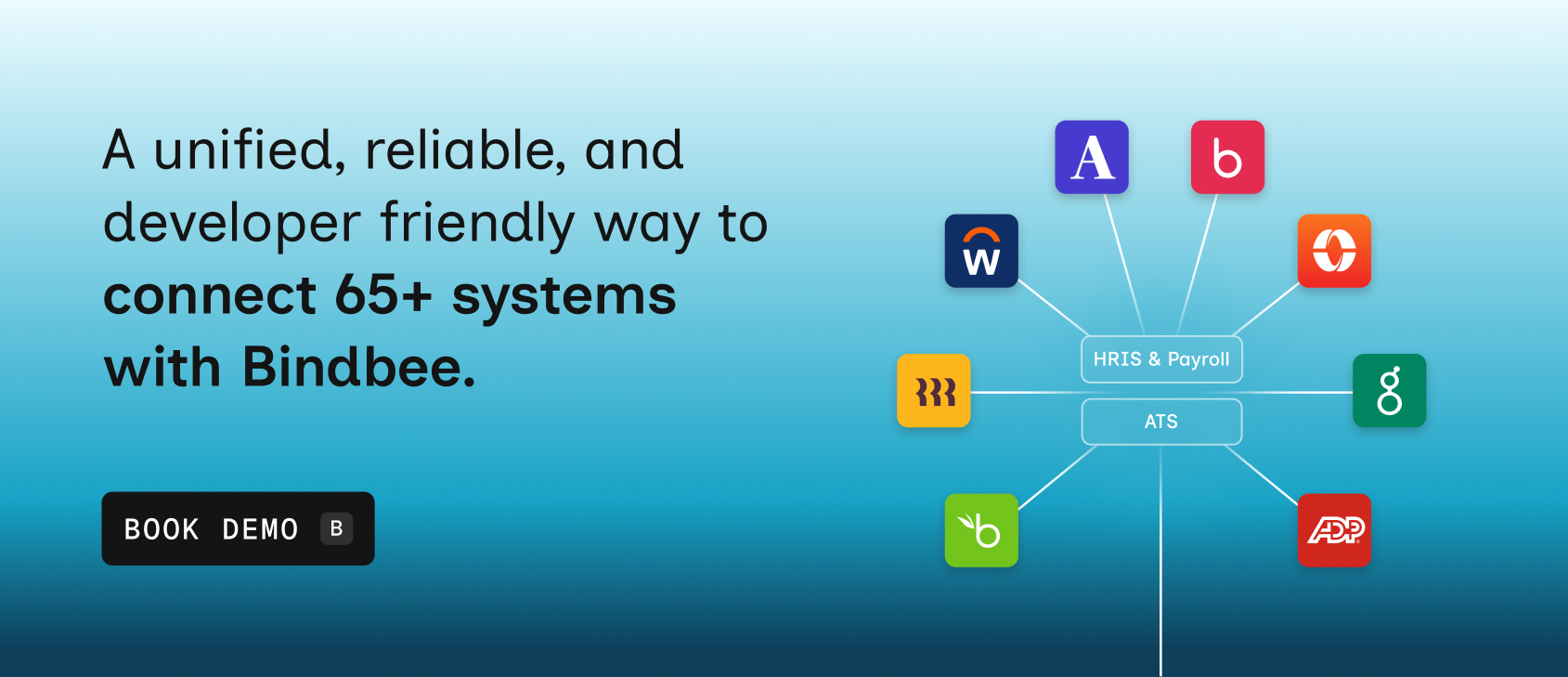
Bindbee connects to 110+ HRIS, payroll, and ATS systems — including both modern API-based connections and SFTP-based systems where applicable. The integration layer handles the transport differences internally, so your product always works with the same normalized data model regardless of how the underlying system exchanges data.
Book a demo to see how Bindbee handles both SFTP and API integration.