

A Guide for crafting a Winning API Integration Strategy

Summarise the blog with AI
API integrations are the backbone of efficient business operations, but building a winning strategy requires more than just connecting systems. It takes intentional design, the right tooling, and an infrastructure that can scale with your product.
Here’s what a successful API integration strategy actually looks like for HR Tech and benefits platforms.
Start With the Data, Not the Systems
Most teams make the mistake of starting with a list of HRIS platforms they want to support. The better starting point is the data your product actually needs: employee records, payroll data, deductions, dependents, benefits enrollment.
Once you know the data model, you can evaluate integration infrastructure on coverage and depth rather than just system names.
Build for the Long Tail
Your first five customers might all be on BambooHR. Your next twenty will be spread across Workday, ADP, UKG, Rippling, Gusto, and Paylocity. A winning integration strategy accounts for that long tail from the start, which means not building point-to-point integrations that don't compose.
Where Unified APIs Win
One integration to Bindbee gives you normalized access to Workday, ADP, UKG, and 110+ other HRIS and payroll systems. The schema is consistent. The auth is managed. The maintenance is Bindbee’s problem.
For HR Tech and benefits platforms, this is the difference between spending engineering time on integrations and spending it on product.
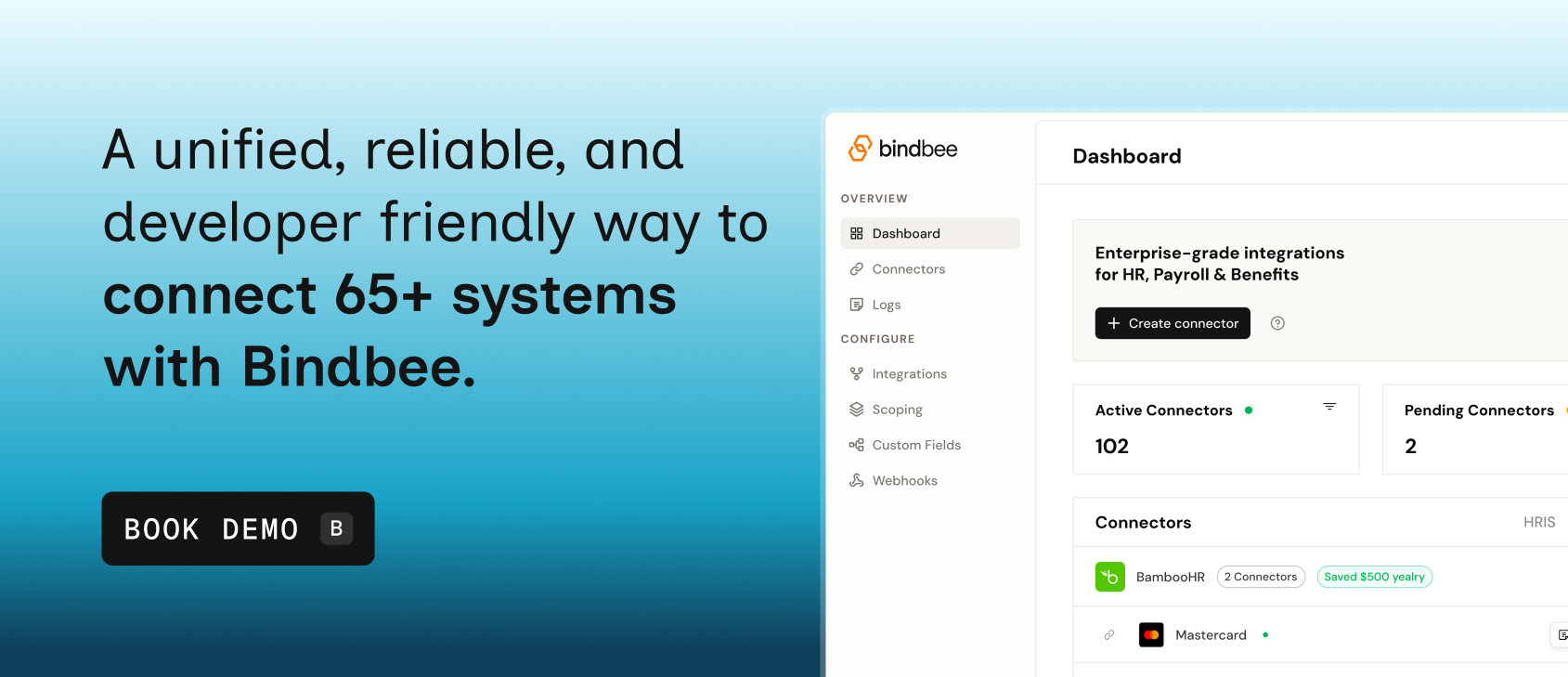
Book a demo to see how Bindbee supports an integration strategy across 110+ HR and payroll systems.