

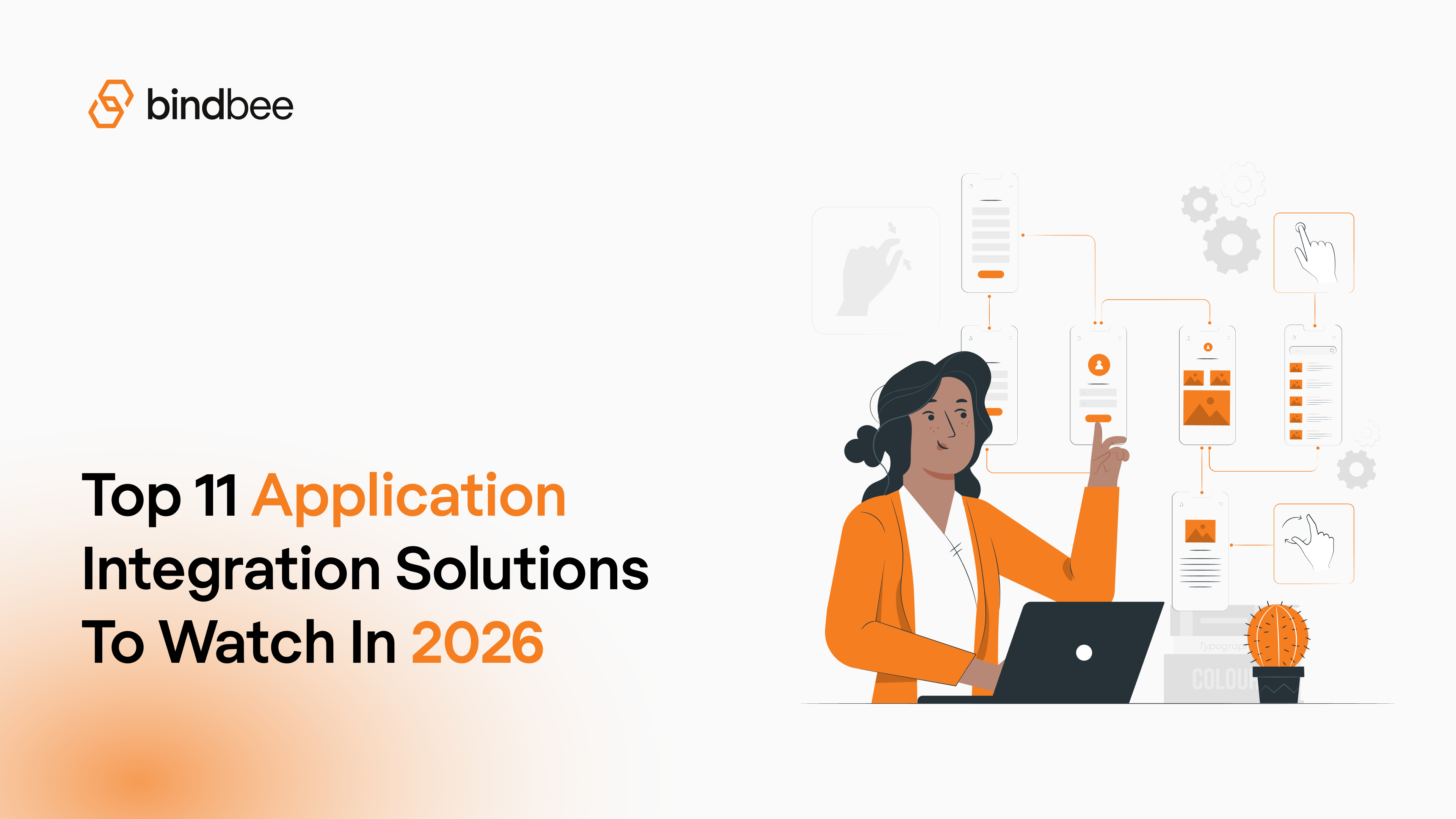
Top 11 Application Integration Solutions to Watch in 2026
Summarise the blog with AI
Application integration solutions have expanded well beyond traditional middleware. For HR Tech and benefits platforms, the top solutions range from general iPaaS platforms to purpose-built unified APIs — and the right choice depends on whether you need horizontal workflow automation or deep HR data coverage.
This guide covers the top application integration solutions, what each excels at, and how to evaluate them for HR Tech use cases.
Top Application Integration Solutions
1. Bindbee — Best for HR Data Integration
Bindbee is a unified employment data API that provides deep coverage of 110+ HR and payroll Tools with normalized employment data across HRIS, ATS, and payroll systems. Unlike general integration platforms, Bindbee is purpose-built for HR Tech — normalizing employee, compensation, deduction, dependent, and time-off data so your product doesn't need to handle per-vendor schema differences.
Best for: Benefits platforms, 401(k) providers, HR Tech SaaS that needs normalized employment data with read and write support across diverse HRIS environments.
2. MuleSoft
Enterprise iPaaS with comprehensive API management and broad connectivity. High implementation cost, requires dedicated expertise. Best for large enterprises with complex multi-system architectures.
3. Boomi
Low-code iPaaS with a strong connector library. Good for mid-market to enterprise teams needing general business process integration. Less depth for HR-specific data models.
4. Workato
Workflow automation and embedded iPaaS. Strong for cross-functional automation across CRM, ERP, and HR. Business-user-friendly. Limited for deep HR data integration. Noted for workflow automation, embedded integration tooling, and broad coverage across SaaS applications. Better suited to customers who want to self-configure connections.
5. Zapier
Simple trigger-action automation for SMB use cases. Easy to use, limited in depth and enterprise-grade reliability. Better for simple point-to-point workflows than complex HR data integration.
6. Celigo
Business application integration with prebuilt templates, particularly strong for ERP and e-commerce. Less suited for HR-specific data use cases.
How to Evaluate Application Integration Solutions for HR Tech
The key differentiators for HR Tech are: system coverage (which HRIS, payroll, and ATS platforms are supported), data depth (which HR objects are available and how normalized they are), write-back support (can you push deductions, contributions, and compensation updates back), and maintenance model (who handles API updates when vendors change their endpoints).
General iPaaS platforms solve broad workflow orchestration. Purpose-built unified APIs solve deep HR data access at scale. For most HR Tech and benefits products, the latter provides a faster path to production-grade integrations.
Book a demo to see how Bindbee fits as an application integration solution for HR Tech.