

Startup Growth Through Integrations: 2024 Strategy Guide

Summarise the blog with AI
Early-stage startups that get integration right in 2024 have a significant advantage going into the next growth phase. This guide covers the integration decisions that matter most for startups and how to make them without over-investing in infrastructure you don't need yet.
The Startup Integration Dilemma
Early-stage HR Tech startups face a tension: customers need integrations to buy, but building integrations takes engineering time you'd rather spend on product. The wrong answer is to defer integrations until "later." The right answer is to use infrastructure that gives you broad integration coverage without the full engineering cost.
What Integrations Matter First
For most HR Tech and benefits startups, the first integration priority is the HRIS systems your initial customers use. ADP, BambooHR, Gusto, and Workday often appear early. Building each from scratch is weeks of engineering per system. A unified API covers all of them at once.
Build vs. Buy at the Startup Stage
At early stage, the math strongly favors buying integration infrastructure. Engineering time is your scarcest resource. Building and maintaining HRIS connectors pulls engineers away from the core product features that determine whether you retain customers.
A unified HR API like Bindbee gives you coverage across 102+ systems without the connector build cost, freeing your team for core product work.
Planning for Scale
The integration architecture you start with often persists longer than expected. Choose a unified API layer from the start, and you avoid a painful migration when you're at 50 customers and trying to support 20 HRIS systems simultaneously.
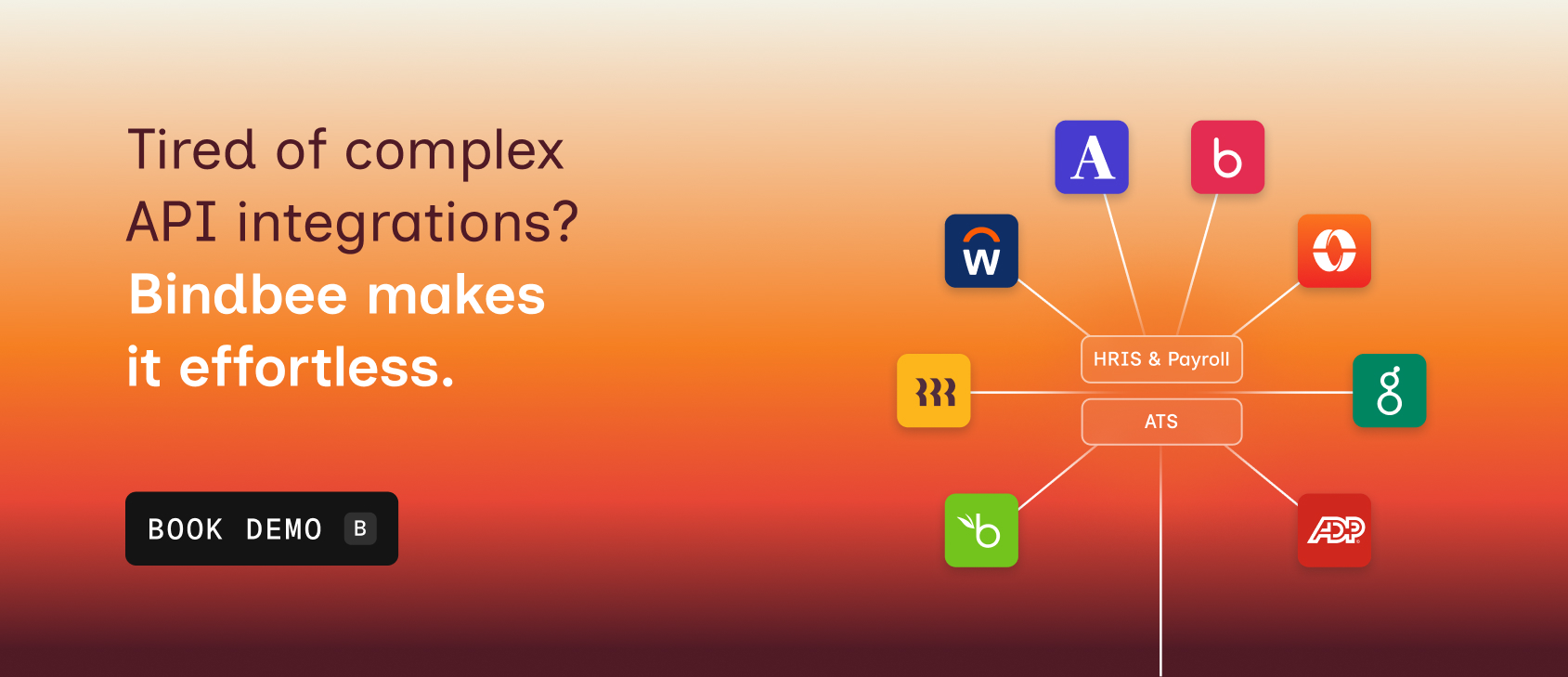
Book a demo to see how Bindbee helps startups scale integrations without the overhead.