

The Complete Guide to Software Integration for Modern Businesses
Summarise the blog with AI
The debate between SFTP and API integration comes up often in HR Tech and benefits platforms, particularly when supporting enterprise customers who still rely on legacy payroll systems or benefits carriers that haven't moved to modern APIs.
This guide covers the key differences, when each approach is appropriate, and how to handle the reality that many integration environments require both.
SFTP Integration
SFTP (Secure File Transfer Protocol) is a batch-based data exchange method. Files, typically CSVs or flat files, are dropped to a shared server on a schedule and picked up by the receiving system.
When SFTP is appropriate:
- The external system doesn't expose an API
- The integration involves high-volume bulk data transfers
- The use case doesn't require real-time sync (e.g., monthly payroll reports)
- You're connecting to legacy benefits carriers or insurance systems
Downsides: Latency is inherent (batch schedules mean stale data), error handling is limited, and file format changes are a maintenance burden.
API Integration
API integration connects systems through programmatic interfaces, enabling real-time or near-real-time data exchange, event-driven workflows, and bidirectional sync.
When API is appropriate:
- Real-time data accuracy matters (benefits eligibility, payroll deductions)
- You need write-back support (pushing deduction changes to payroll)
- Your integration needs to respond to events (new hire, termination, compensation change)
- You're scaling to many employer clients and need a maintainable architecture
Downsides: Requires the external system to have a well-documented, stable API. Not all HR systems do.
The Practical Reality
Most HR Tech and benefits platforms need both. Modern HRIS systems like Workday, Rippling, and ADP Workforce Now expose robust APIs. Legacy systems and many benefits carriers still rely on SFTP.
A mature integration layer handles both without requiring your application to treat them differently. That's one of the core advantages of unified HR API platforms — they abstract whether the underlying connection is API or SFTP, presenting a consistent interface to your product either way.
How Bindbee Handles Both
Bindbee supports 102+ HRIS, ATS, payroll, and benefits systems, including both modern API-based connections and SFTP-based systems where applicable. The integration layer handles transport differences internally, so your product always works with the same normalized data model regardless of how the underlying system exchanges data.
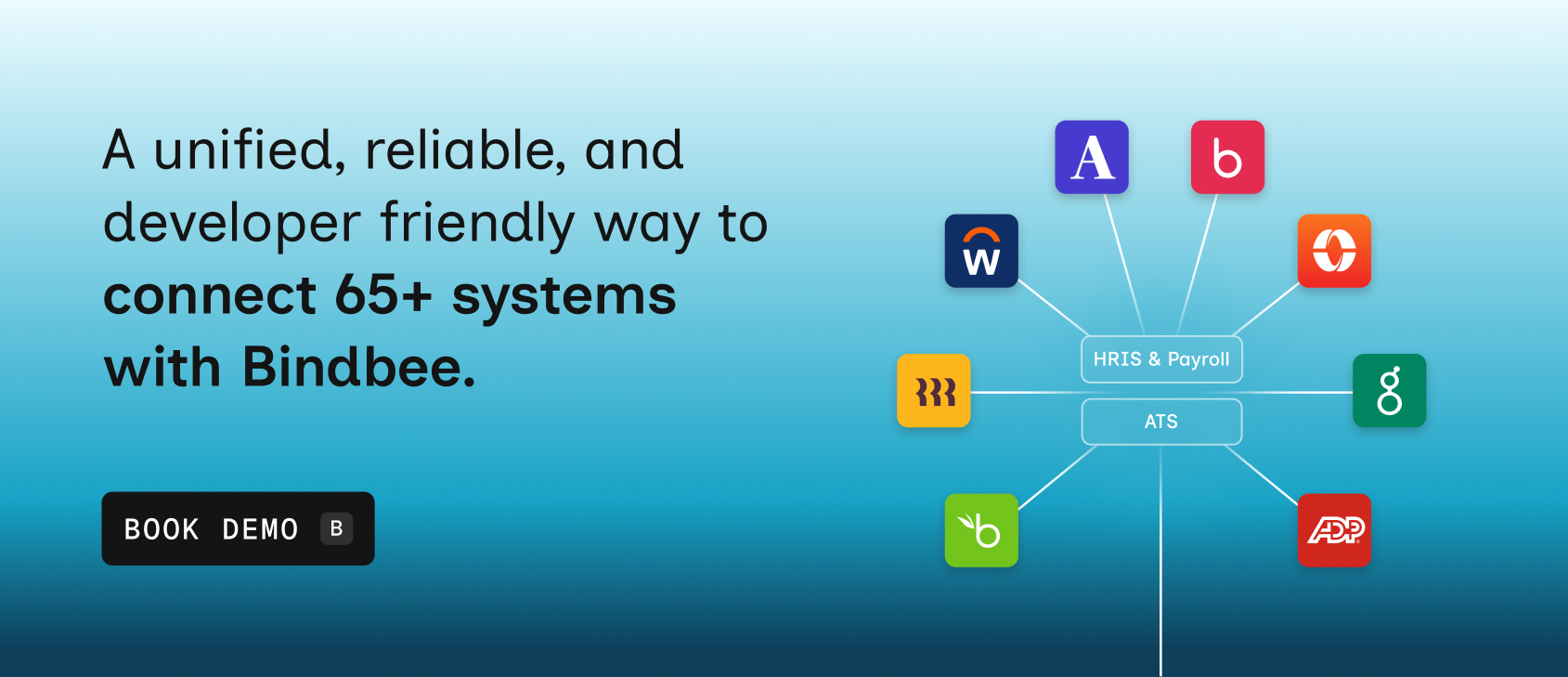
Book a demo to see how Bindbee handles both SFTP and API integration.