

What is Workday Integration? A Beginner's Guide
Summarise the blog with AI
Did you know that more than 33% of businesses report payroll errors costing them time and money every year? For HR Tech platforms and benefits companies, the underlying cause is almost always the same: fragmented HRIS integrations that can’t keep up with how enterprise systems like Workday, ADP, and UKG actually work.
This guide explains what Workday integrations require specifically, and how Bindbee normalizes Workday alongside 110+ other HRIS and payroll systems through a single API.
What Makes Workday Integrations Hard
Workday is the gold standard for enterprise HRIS. It’s also one of the most complex integrations to build and maintain. Three core reasons:
- Custom tenant configurations: Every enterprise configures Workday differently. Field names, custom objects, business process rules, and data structures vary significantly between companies. An integration built for one Workday customer may not work for another without significant rework.
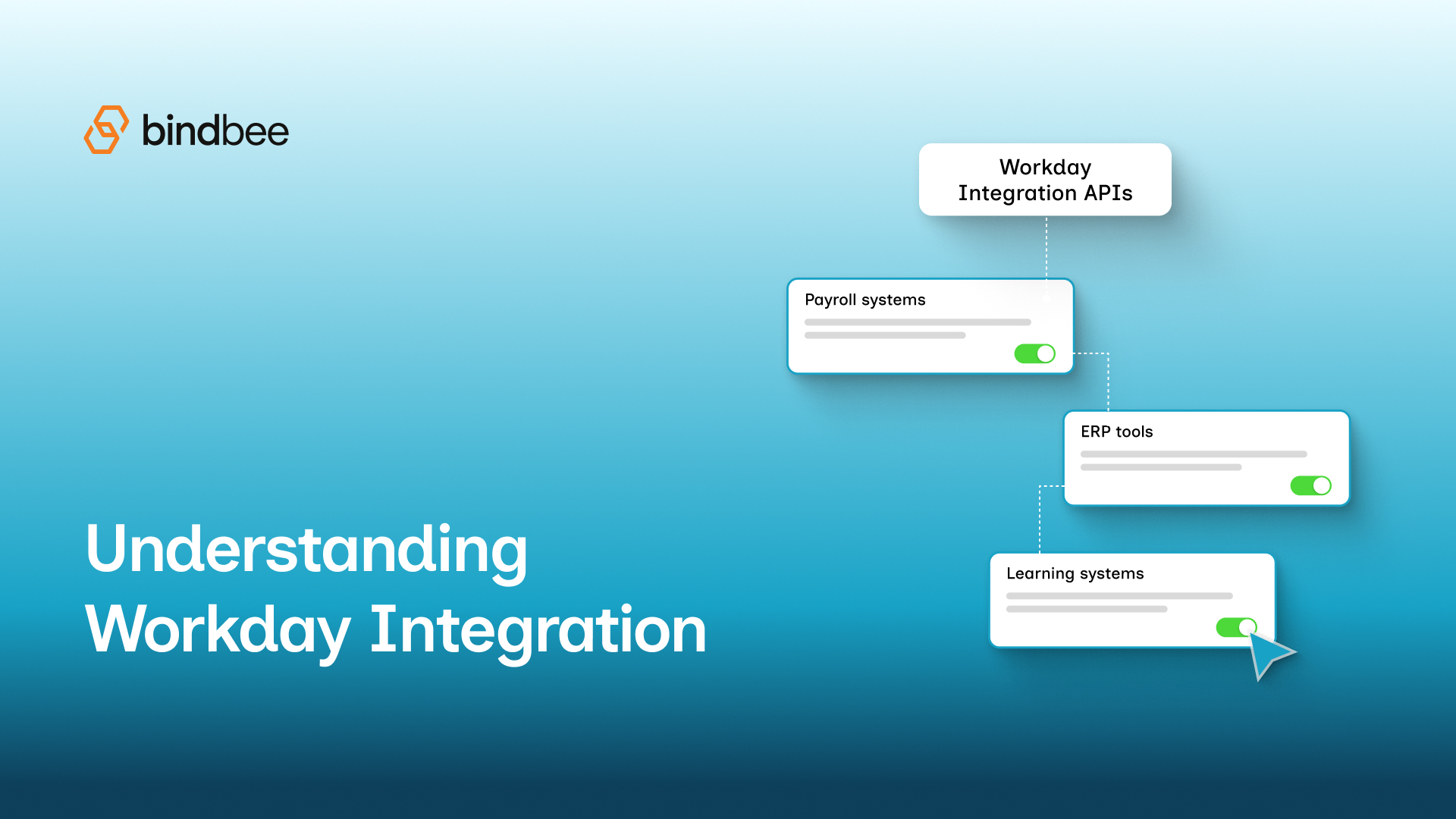
- Multiple API types: Workday uses SOAP web services for some data, REST APIs for others, and RaaS (Reports as a Service) reports for custom data exports. Different use cases require different integration patterns and different expertise.
- Partner certification: Production API access requires Workday partner program certification, which adds months to your timeline and requires ongoing relationship management.
What You Need From Workday
For HR Tech and benefits use cases, the key Workday data objects are:
- Workers: Employee profiles, employment status, hire and termination dates, job details.
- Compensation: Base salary, pay rate, pay frequency, and effective dates.
- Benefits: Enrollment data, plan elections, coverage levels, and dependent information.
- Org structure: Supervisory orgs, cost centers, locations, and management hierarchy.
- Time off: Leave requests, balances, and accrual policies.
- Pay groups: Payroll groupings that determine deduction timing and frequency.
Using Bindbee for Workday Integration
Bindbee normalizes Workday data alongside ADP, Rippling, UKG, and 110+ other HRIS and payroll systems. One integration covers all your employer clients regardless of which system they use.
- Handles Workday’s SOAP, REST, and RaaS complexity internally
- Maps Workday’s tenant-specific configurations to Bindbee’s standard schema
- Manages Workday partner certification on your behalf
- Delivers normalized employee, compensation, benefits, and time-off data through one API
Book a demo to see how Bindbee handles Workday and 110+ other HR and payroll integrations through one API.