

Top 5 API Advantages for Business Growth and Efficiency

Summarise the blog with AI
APIs are now foundational to how modern software products work. For HR Tech and benefits platforms, the question isn't whether to use APIs — it's understanding what benefits they actually deliver and how to evaluate API quality before building on top of them.
This guide covers the top API advantages, what they mean for HR Tech specifically, and what to look for when evaluating API-based integrations.
Top API Advantages for Business Growth and Efficiency
1. Automation of Repetitive Workflows
APIs enable automated data exchange between systems, eliminating manual processes. For HR Tech, this means enrollment changes automatically reach payroll, new hire data flows from ATS to HRIS, and terminations trigger downstream offboarding without manual intervention.
2. Real-Time Data Access
Well-designed APIs provide real-time or near-real-time data access. For benefits platforms, this means eligibility is always current, deduction amounts reflect the latest elections, and compensation data used for analytics is accurate.
3. Scalable Integration Architecture
APIs allow you to build integration architecture that scales with your customer base. Instead of custom data exports per employer, a single API layer handles all connections. As you add customers, the integration scales without proportional engineering effort.
4. Reduced Development Cost
Building on top of existing APIs is dramatically faster than building data pipelines from scratch. For HR integrations specifically, using a unified API that already normalizes data across systems reduces development time from months to weeks.
5. Ecosystem Connectivity
APIs make your product part of an ecosystem. Customers choose platforms that work with their existing stack. For HR Tech, supporting the HRIS systems your customers already use isn't optional — it's a sales requirement.
6. Reliability and Standardization
Good APIs provide consistent, predictable interfaces. When data structures are standardized, your application logic doesn't need to handle per-vendor variations. This reduces bugs, simplifies testing, and makes the system easier to maintain.
What API Quality Looks Like for HR Data
Not all APIs are equal. For HR Tech use cases, API quality means: normalized data models across systems, read and write support for core objects, webhook support for real-time events, strong authentication and security, and active maintenance as vendors evolve their systems.
A unified API that abstracts these complexities across 102+ HRIS and payroll systems — like Bindbee — delivers these advantages without requiring each to be solved per vendor.
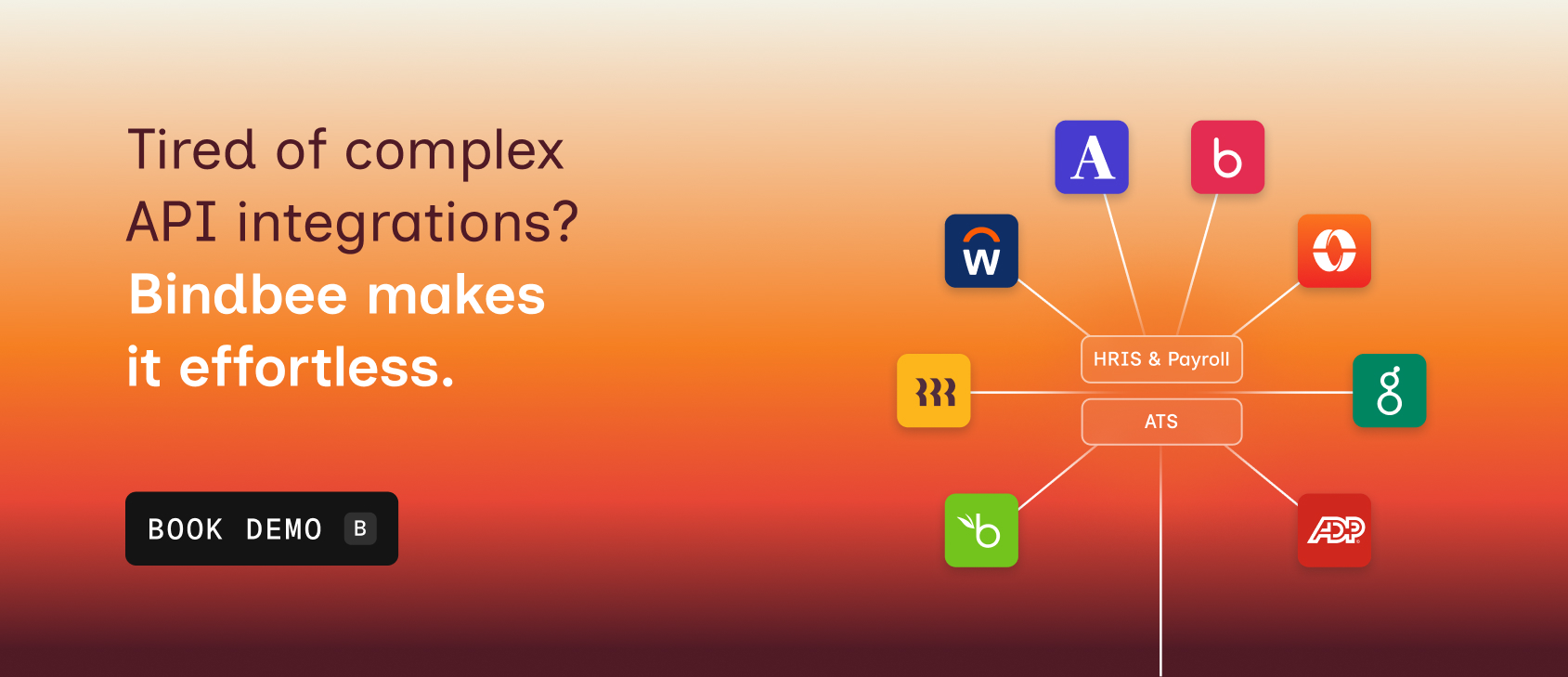
Book a demo to see Bindbee's unified API in action.